From $1.49 chocolate countdowns to luxury calendars costing thousands, brands are selling the pleasure of having something to look forward to. Here’s how smaller businesses can join in right now.

I bought myself a really cool self care advent calendar a few years back and every since I’ve been hooked on them.
Apparently I’m not the only one because it seems that everyone has one this season. A few days ago I spotted a huge stack of Advent calendars at Trader Joe’s for $1.49 each. Then there’s the Sephora 25 Days of Beauty Must Haves at $195; and the Voluspa 12 Days of Christmas Candle Set at $185 (which seems to be the median selling price for beauty calendars). Of course, the other end of the spectrum has a few more zeros attached to the selling price → Dior’s La Malle des Rêves calendar sells for $8,200.
Why do people love Advent Calendars? For me it’s the mystery, creativity, and a succession of little treats that these gift sets hold.
If you haven’t already produced an Advent calendar, November is late to begin developing custom packaging and an entirely new assortment → but that doesn’t mean you can’t:
do a countdown box for Valentine’s Day;
do a zodiac themed calendar box;
a birthday week countdown;
create a digital advent calendar that will bring customers onto your website and present them with 24 unique treats of various types.
When designing these boxes consider what would your customers look forward to opening?
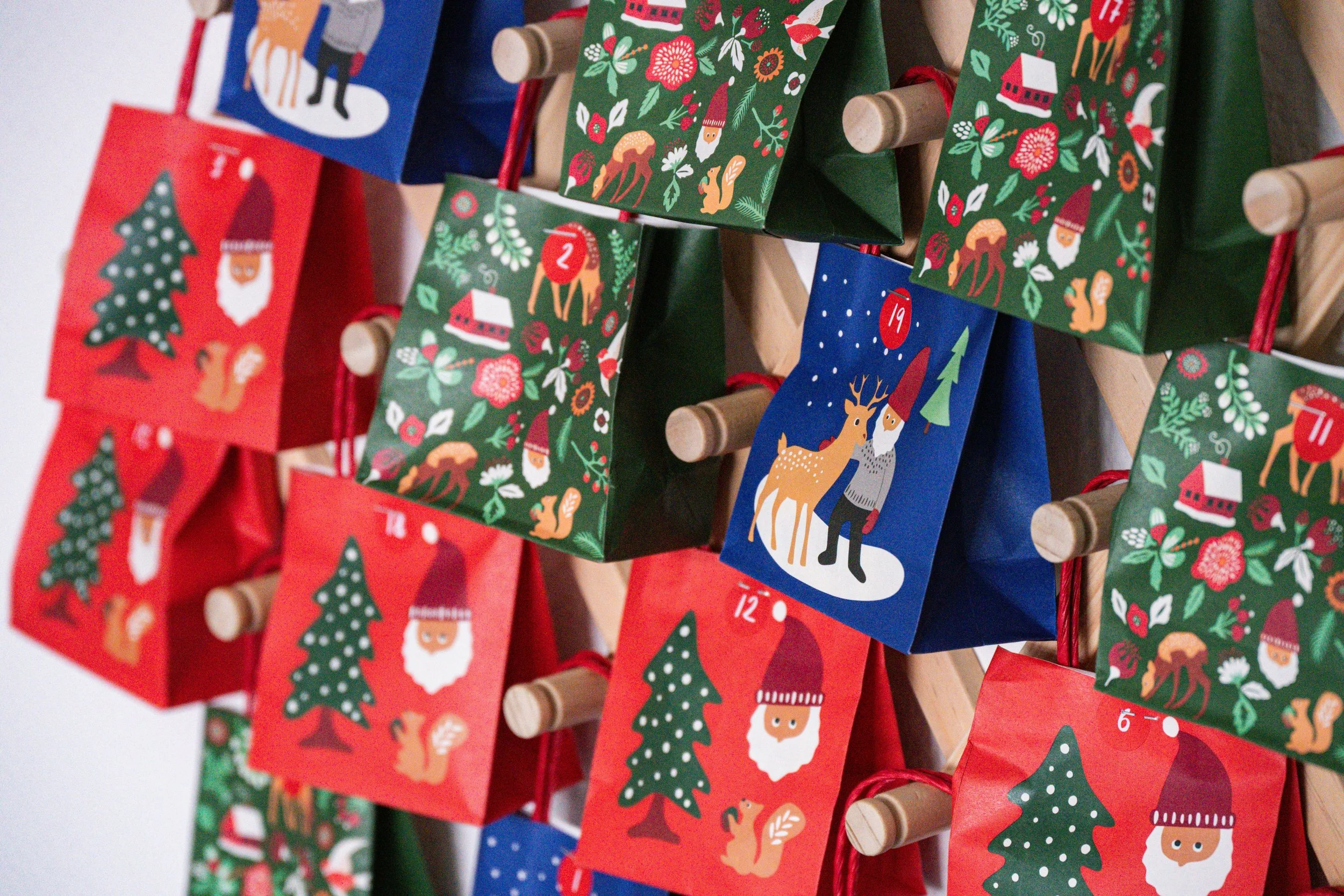
How popular are Advent calendars?
A quick pop around social media and the thrill of advent calendars is palpable.
In its December 2025 holiday research, CivicScience reported that Advent calendar participation had reached 28%, up from 22% in 2024. Adults aged 18–29 showed the strongest interest, while participation among those aged 30–44 increased by nine percentage points.
A separate Ipsos survey of 1,036 adults aged 16–75 in the UK, conducted in September 2025, found that 72% said they purchased Advent calendars. Chocolate remained the most commonly purchased type, but 40% of respondents aged 18–34 said they had purchased a beauty calendar.
And, like me, people are buying for themselves. In the Ipsos research, 51% said they bought calendars for themselves, alongside purchases for children and partners. That gives brands two useful ways to present an offering: a gift for someone else and a December ritual for the customer.
What do Advent calendars cost?
The range is extraordinary. The luxury example such as the Dior set mention above are attention-getting, but slapping a huge price tag on a set is somewhat missing the point. Advent calendars are meant to be curious and spellbinding little treats that carry loved ones (and yourself) through the season. Just like special mugs, cookie baking, holiday movies, and decorating help us close out the year - the Advent calendar shouldn’t be just another high ticket expense that piles on stress to an already harried season.
Ipsos also found that 55% of calendar purchasers in its British survey planned to spend £10 (about $13.50) or less - demonstrating that market should regard Advent calendars as an inexpensive seasonal pleasure, over a substantial gift.
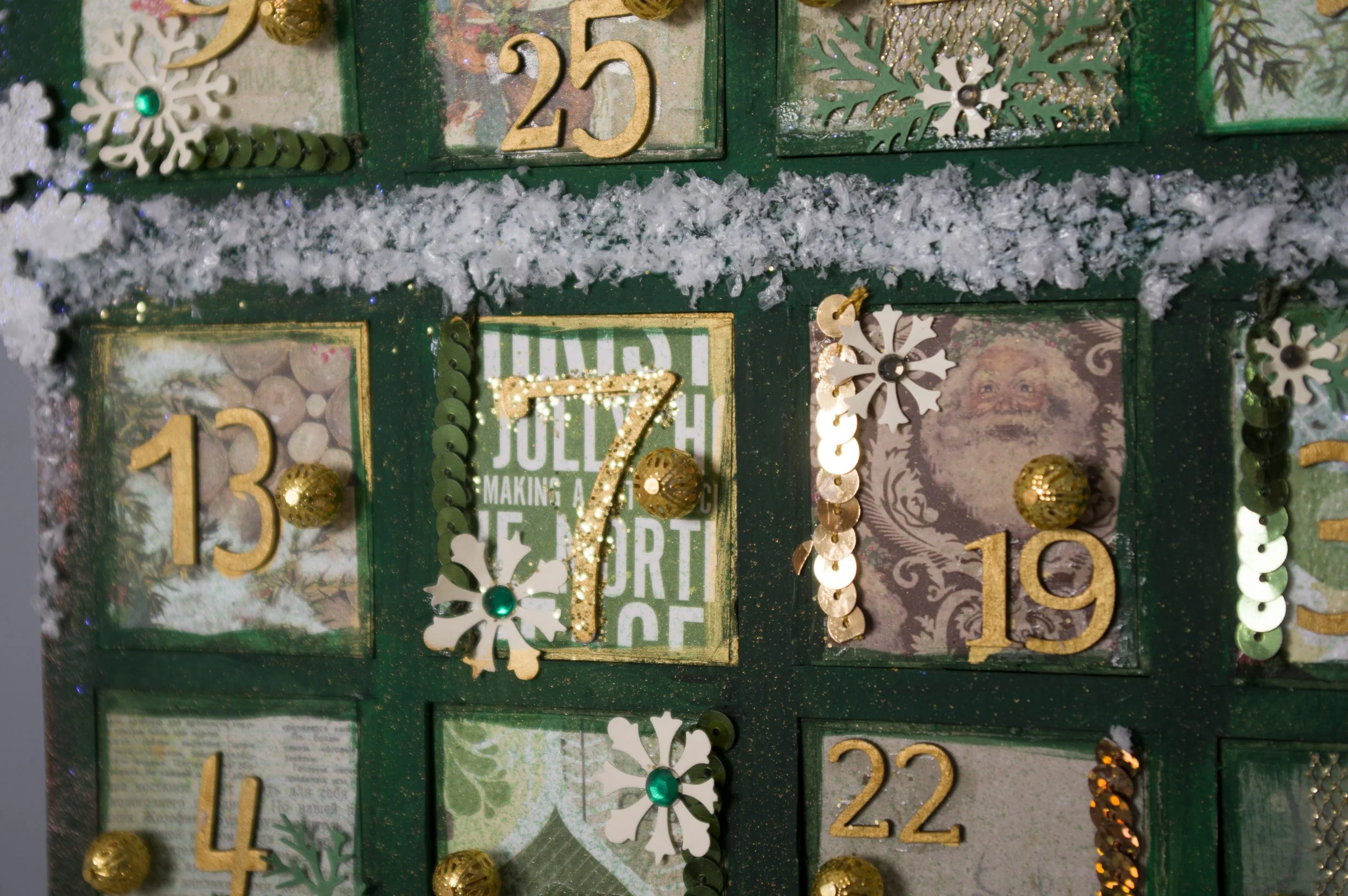
Why do people like them so much?
For one, an Advent calendar is a season long pleasure. By opening a door or pouch every day the recipient is stretching out the enjoyment of a purchase - and it becomes a set feature rather than a box chucked to the back of the junk closet.
There’s familiarity in the ritual, even when the contents are new. Opening a little door recalls a childhood tradition. Discovering a fragrance, tea or hand cream makes it feel relevant to an adult’s life. The format also gives a modest treat a sense of occasion that it might not have sitting loose in a shopping bag.
For someone who already loves a brand, a calendar can offer variety within a familiar world. Bonne Maman’s 2026 Advent Calendar, for example, includes seasonal flavors that make the assortment distinct from buying another jar of a pantry staple. That is a useful lesson in curation: give customers a reason to want the collection as a whole.
And the format lends itself to social content. Each reveal supplies a new image, reaction or conversation. That creates an opportunity for brands, although buying a calendar is hardly a contractual obligation to post about it.
Why should a small brand bother this late in the season?
A calendar is worth considering when it serves a clear business purpose and you can deliver it well.
It can introduce customers to more of your range. Someone who always buys your lavender soap might discover that they also love your citrus scent. A thoughtfully chosen assortment lets customers explore without selecting every item individually.
It can create a more distinctive gift. Four beautifully wrapped products with a reason to open each one can feel more considered than four products dropped into a box. The sequence and presentation become part of the gift.
It can support a sustained campaign. You have a theme for photography, emails, product education and customer participation. Plan that content before you launch, so the calendar earns its place in your marketing schedule.
It also gives you a small experiment for next year. A manageable first edition can show whether people want the concept, which price attracts purchases and how much work fulfillment requires. Measure orders and margin for a physical calendar; for a digital version, look at return visits, sign-ups and resulting sales.
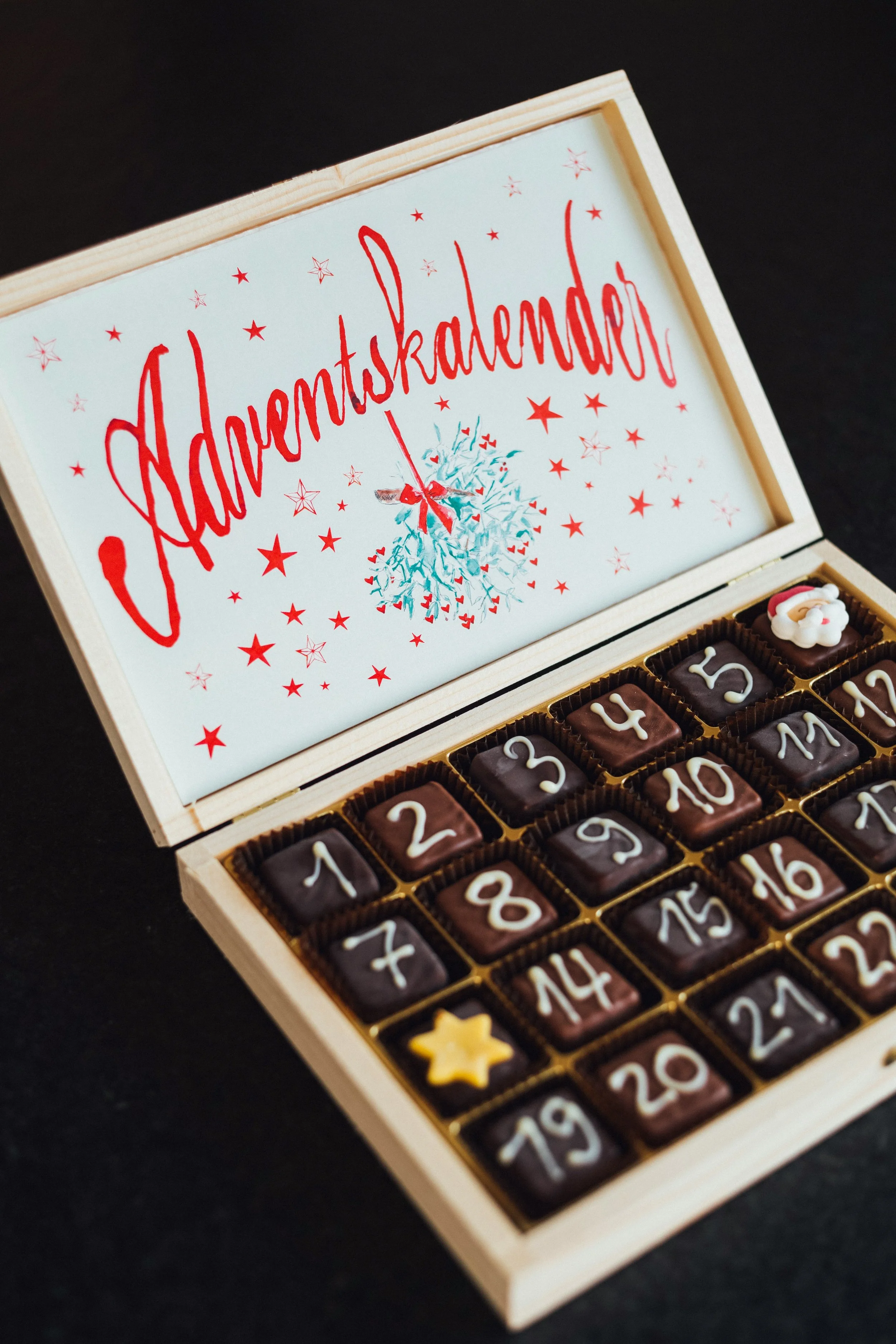
Advent calendars aren’t just for Christmas anymore
Not to be left out - Valentine’s Day countdowns are a clever variation on the theme.
Last year Lush introduced a seven-treat Valentine’s countdown in 2025, while Brielle Cosmetics offered a “14 Days of Love” Valentine’s Day Advent calendar.
For smaller brands, this opens up another planning window. If a Christmas version would be a scramble, you could develop a seven-day collection for February 8–14 or a fourteen-day countdown beginning February 1. In practical terms, it would need to reach customers before the first opening date on the first of February, rather than arrive as a gift on Valentine’s Day.
A bath and body brand could offer seven wrapped treats for a week of indulgence.
A candle company could create a short scent discovery collection.
A retailer could pair small gifts with handwritten-style love notes, and a digital calendar could reveal daily ideas for celebrating a partner, a friend or yourself.
That gives you a useful choice now: test a small Christmas edition and apply what you learn to February, or give yourself more breathing room and make Valentine’s Day your first launch. The pleasure of anticipation doesn’t disappear when the Christmas tree comes down.
Easy Advent calendar ideas for small brands
Four Sundays, four wrapped gifts
This is one of the most practical versions for a brand with a small assortment. Choose four products, wrap them separately, and number them in the order you want customers to open them. Place them in one sturdy gift box with a card explaining the ritual.
A bath and body brand could include a soap, bath soak, hand cream and body oil. A home store might choose a small vase, ornament, tea towel and candle.
For a traditional Advent schedule in 2026, the four Sundays are November 29, December 6, December 13 and December 20. That first date matters: customers need the box before the end of November. A different four-week December series can work too, provided you explain the dates.

Seven evenings of something lovely
A week is a more approachable commitment for both a brand and a customer. Picture seven individually wrapped votives, seven teas, or a mix of small bath and body treats presented as an evening ritual.
Give the assortment a creative theme, such as “Seven Winter Evenings,” and include a short card for each reveal. The appeal of set like this comes from a considered sequence → and every item should earn its place.
A short beauty discovery calendar
Try five or seven days using sealed, properly labeled products you already have available. Identify which are samples, travel sizes and full-size products, and disclose their quantities.
The surprise can be the order in which products appear - choose products that make sense together.
A shop-local countdown
A local boutique has an advantage over a standalone brand when it comes to on-the-fly advent calendar creation. A store owner can easily curate across categories: an ornament, chocolate, soap, small notebook, tea and a candle, for example. A theme such as “A Cozy Season” gives the assortment a reason to exist and can be a way to sell an entire table display in one box.
Boutiques in a shopping district or with a connection to other stores can use this as an opportunity for a collaboration - someone provides a box, bag, ect - and shoppers go around to every store and buy a pre-wrapped treat to slot into place … this might prove overwhelming for a 24 day countdown, but you can easily make up your own number as it corresponds to elements of your town → ie: Ten stores, ten treats!
A digital Advent calendar on your website
Brands without enough small products can create a series of online discoveries instead. Note: I’m working on one for Boxwood Co as we speak :-)
Each numbered day might reveal a useful download, styling idea, recipe, founder recommendation, short tutorial, discount code, or freebie.
A skincare brand could share winter care tips.
A home store could offer table-setting ideas.
A marketing business could reveal a practical resource each day.
Make the daily reveal joyfully anticipated so your customers will return. Twenty-four discount codes probably won’t get this done unless there’s a chance for something really big in the mix → sort of like that spin-a-wheel plugin you see on many websites these days.
Keep the dates and daily instructions visible as text, and make each available reveal easy to open on a phone. Choose a schedule you can maintain - be it seven days, two weeks, or the full December countdown.
Keep the packaging simple and the promise clear
Numbered paper bags, envelopes or individually wrapped parcels can create the experience without a custom drawer box. Use suitable protective packaging, particularly for glass, cosmetics or food, and let consistent wrapping, labels and a good insert card bring the collection together.
Before setting the price, assemble one complete prototype and time the work. Include the cost of wrapping, packing materials, labor and shipping in your calculations. Then photograph it and show customers what they will receive.
Publish a realistic order deadline, dispatch window and start date. A calendar intended to begin on December 1 has an earlier deadline than a Christmas gift. Local pickup may give you more flexibility than shipping.
And name the format accurately. A “12 Days of Christmas” collection traditionally refers to Christmas Day through January 5. If yours runs before Christmas, “12-Day Christmas Countdown” makes the timing clearer.
The opportunity is to sell the anticipation. Start with products or ideas your customers already enjoy, give the sequence a thoughtful theme, and make each opening feel worthwhile. Four good gifts can be quite enough to look forward to.
Is November too late to launch an Advent calendar?
November can still work for a small batch made from available inventory, a shorter countdown or a digital calendar. Work backward from the first opening date and allow time for assembly, fulfillment and delivery.
Does an Advent calendar need 24 products?
A shorter countdown can contain four, seven or twelve gifts. Name the format clearly and explain when customers should begin opening it.
How can a brand create an Advent calendar without custom packaging?
Wrap products individually or use numbered bags, envelopes or small boxes inside suitable outer packaging. A clear opening schedule and consistent presentation help create the experience.
Can I Create an Advent Calendar for Valentine’s Day and Other Important Days Throughout the Year?
Yes - however these usually can’t be referred to as Advent calendars - most brands that create for Valentine’s Day or special dates during the year call them Countdown Boxes, ect. Valentine’s Day, Birthdays, Zodiac signs are all game for this type of promotion.
Enjoying our marketing updates?
★ Add Boxwood Co as a Preferred Source on Google