A Little Hocus Pocus in the Boardroom?
Workplace witchcraft, founder intuition and knowing when a ritual helps your business.
For small lifestyle brands, intuition and personal rituals can have a place in the founder’s process. The useful question is whether they help you focus and take action, or begin to override customer needs, current evidence and practical business deadlines.
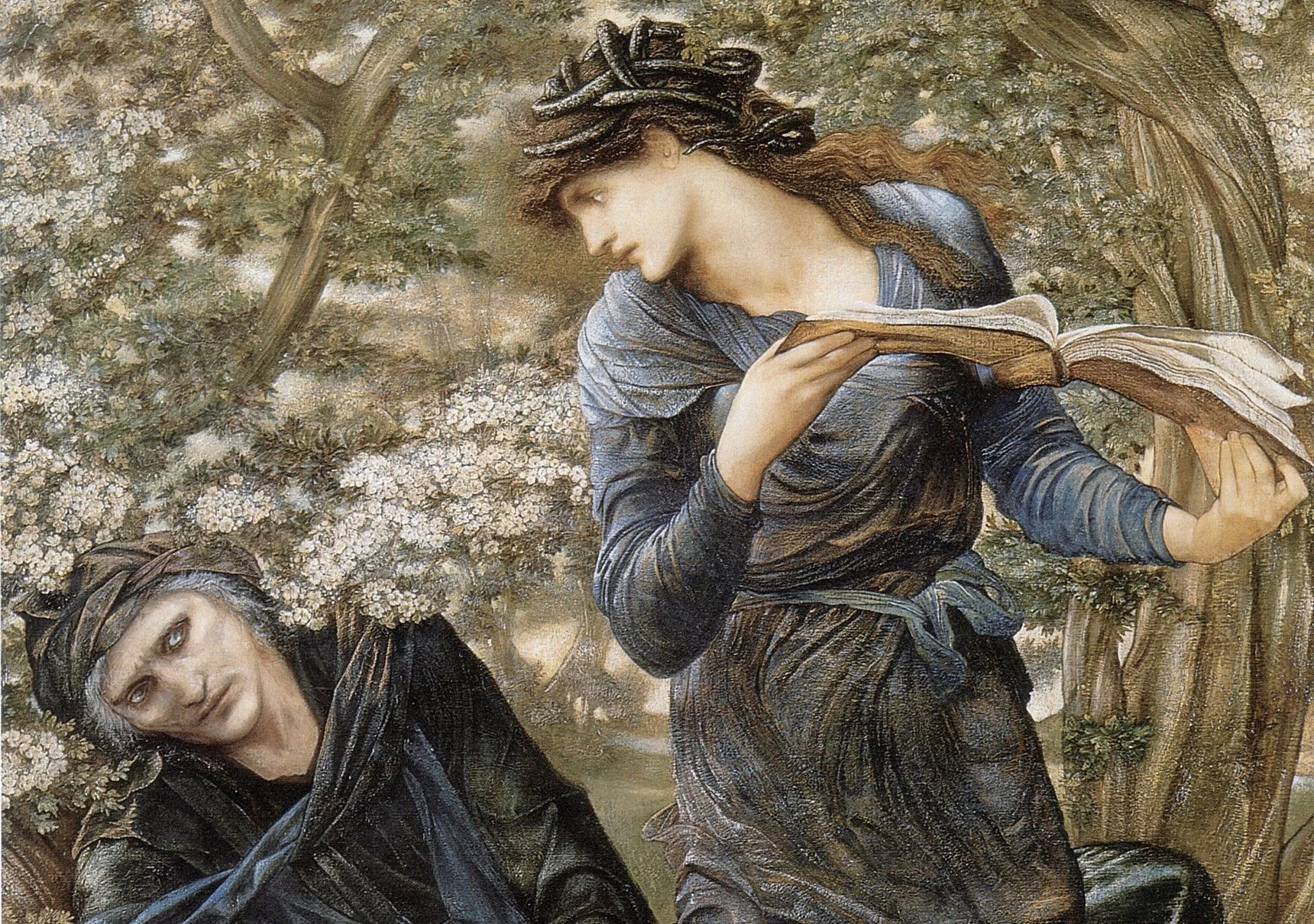
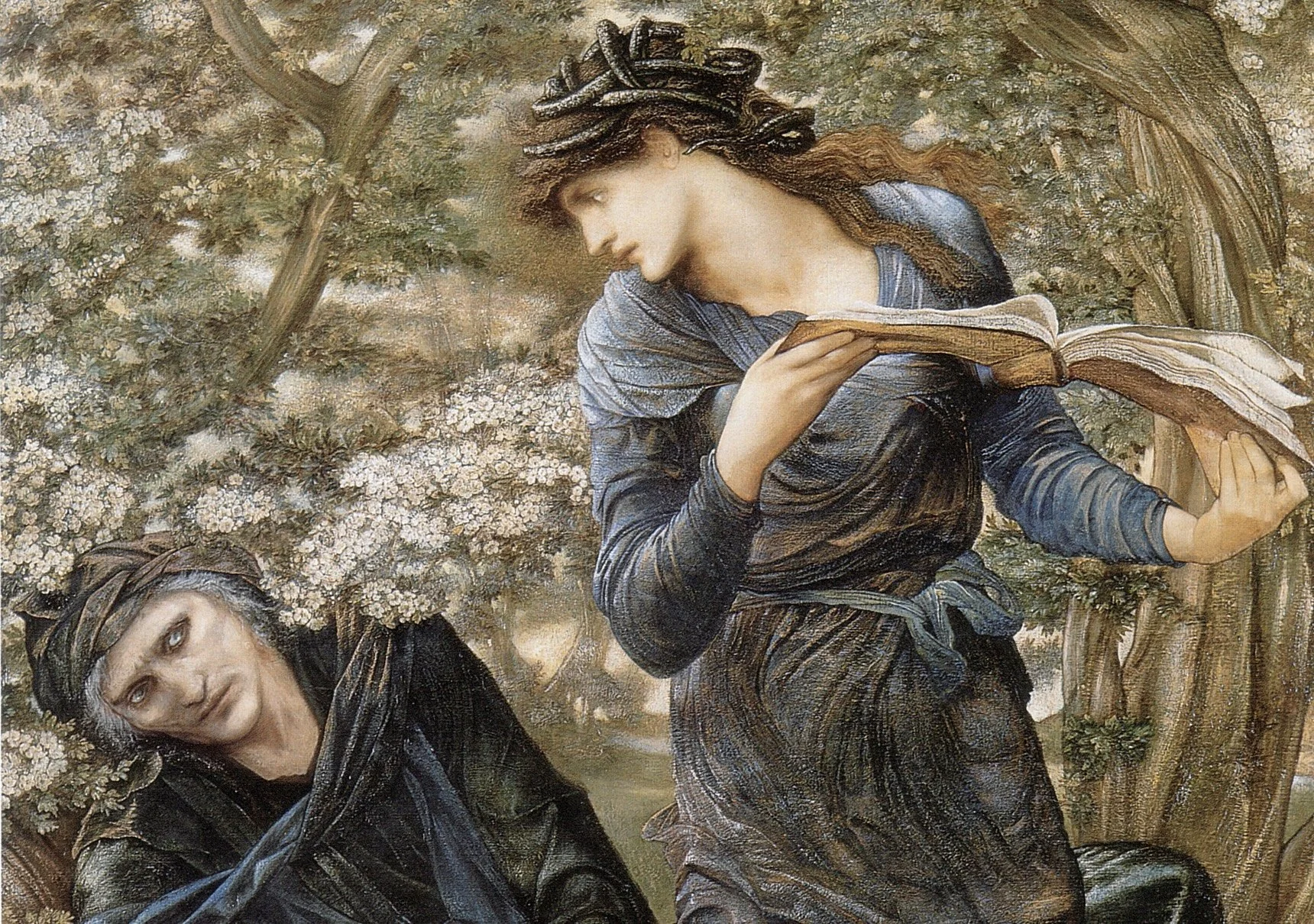
Above: The Beguiling of Merlin by Edward Burne-Jones - The powerful wizard Merlin falls in love with Nimue and teaches her his magical secrets.
I’m always intrigued when I scroll my social feeds and a fun ritual pops up - it seems to happen much more often than ever before, but perhaps that’s just my algorithm.
The ritual I see a lot lately involves sprinkling cinnamon around the front door and placing a coin on the right side of the doormat to conjure abundance. A variation of this is the practice of blowing cinnamon through the front door → the idea draws from the historical element of cinnamon being a spice primarily reserved for the wealthy, and the front door being the primary energetic portal of your home.
What brought this subject to mind is, of course the Halloween season → but also a number of founders and trusted advisers speaking passionately about the pitfalls of clinging to “data” for every decision. How do these two thoughts wrap together? Let’s discuss:
When Data Slows the Decision
“You want to do something? Let's run a test. Let's A/B test it. Let's thread it through the system. Can we [get a cohort] and do do a study on it?” Poppi soda founder Allison Ellsworth told Fortune Magazine recently in a discussion about the role of data in corporate marketing departments. PepsiCo paid $1.95 billion to acquire the prebiotic soda brand last year in an apparent move to reach younger generations.
“And you're just like, okay, well that was a trend two weeks ago. It's not a trend anymore. I don't know what to tell you, but like we've moved on, and like three days is the cycle,” Ellsworth continued. “I feel like within a media cycle, or a social cycle, or a trending cycle, it's three days. If you can't hit within that three days or be the first to move at the speed of culture, like, what are you doing? And big corporations cannot move that quickly, and they need every reason to get in their own way.”
Santiago Duran, a clinical psychologist and founder of The Honest Catapault writes: “One of the most dangerous tendencies in modern marketing is over-reliance on what’s easy to measure. Click-through rates, engagement, CAC—they’re useful, yes, but incomplete. They provide performance snapshots, not strategic guidance.”
Where Does Intuition Fit in Business?
For Ellsworth, Duran and other well informed marketing gurus, following media trends and trusting your intuition is more closely aligned with modern brand building strategy.
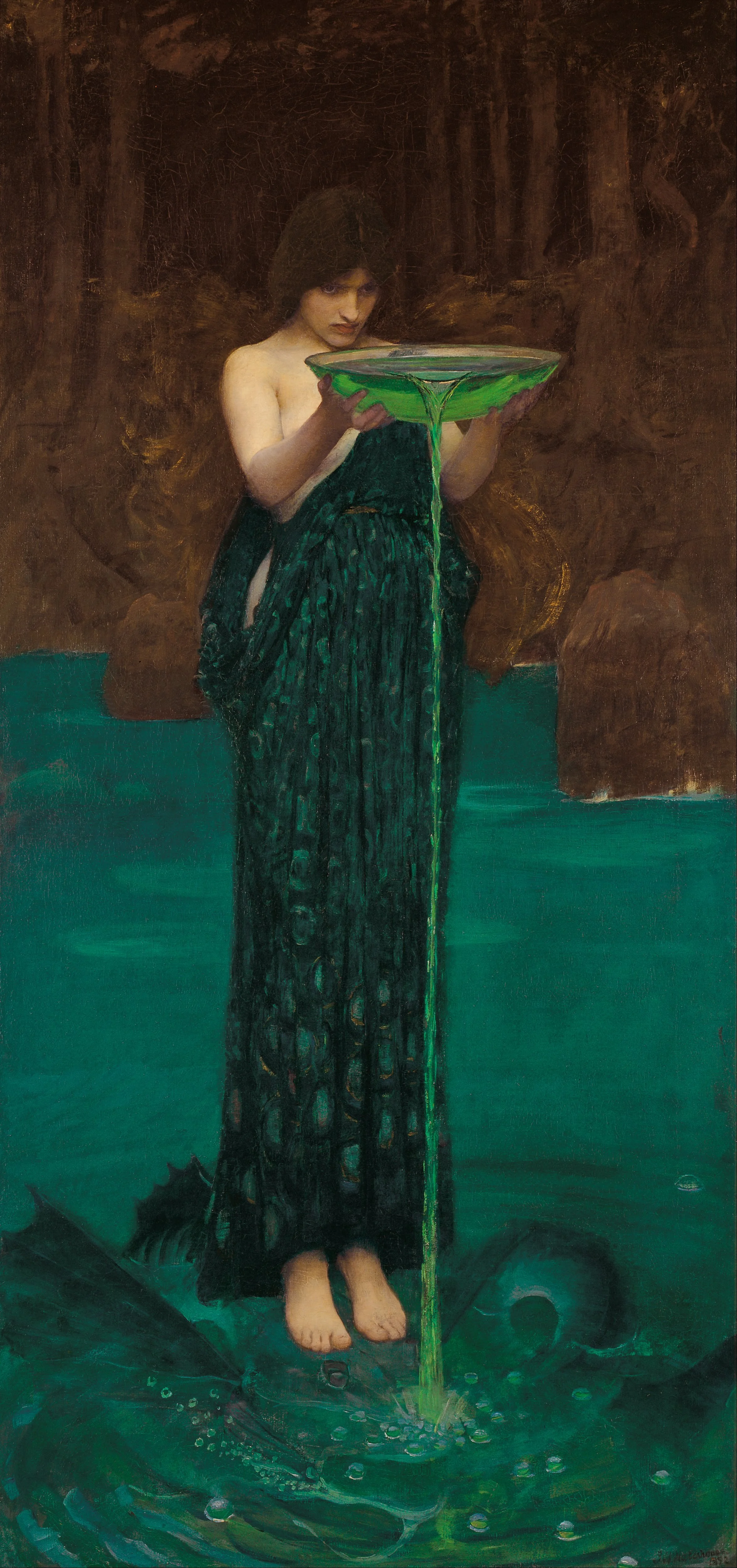
Above: In Circe Invidiosa by John William Waterhouse, Circe the Sorceress floats over green water as she casts a spell on Scylla.
GOOP recently wrote about workplace witchcraft → writer Laura Norkin talked with Rebecca Szymczak who advises executives seeking guidance on their careers, creativity and next business moves. Szymczak’s Executive Witch advisory combines intuitive practices with brand strategy, creative direction, and introductions.
And there’s been a significant rise in the reach of Witch Influencing with some accounts like Lilly Statham’s Mystic Primrose attracting more than 1.3 million followers, The Hedge Witch with 725K following, and Lindsay Squire’s The Witch of the Forest drawing in more than 525K on Instagram alone.
Over the past few months, #WitchTok has drawn more than 64.8 billion views on TikTok, Etsy is offering more than 500,000 products tagged “witch”, and the US psychic services industry was valued at $3.2billion. « Oh wait, that’s all data! So maybe data isn’t as dead as some of us are making it out to be. 😊 »
Much of the advice that witch influencers give involves self actualization through mantras, candle rituals, numerology and manifesting. But does it work?
What Is Workplace Witchcraft?
Around this time of year, aka the Season of the Witch, everyone seems to want to get into the act. Pointy hats, black capes, crystals and herbs are everywhere.
In media, witches range from the delightfully deranged Sanderson sisters and the Wicked Witch of the West, to the misunderstood women of Practical Magic. All characters with less than influential pedigrees.
Then there’s the intuitive, nature-connected Cassie Nightingale in the Hallmark Channel’s Good Witch → someone regarded as a caring friend and local guru within her charming town of Middleton, Illinois.
Most of the influential, self defined witches on social media are more Cassie Nightingale then the ladies of Hocus Pocus. Often incorporating meditation, numerology, herbalism, tarot, and positive manifestation into their practices, their focus is on reaching for the good in life → rather than spinning up curses against your competitors.
Does Your Marketing Need a Spell?
Lifestyle brands have plenty of room for imagination within their storytelling, and charging crystals under a full moon can only help fuel that creativity.
Many of the self care brands that I’ve worked with over the years have aligned their product design with various concepts of mysticism - so it’s certainly nothing new.
But turning away from traditional, narrowly defined “data” and focusing more intently on developing the flow of intuition probably is.
“Spells, spoken words, candles, anointing oils, crystals, written intentions, song, music, art can all work in combination,” Helen Beckman, founder of The Argyle Oracle, told Vogue Australia recently. “What separates practice from a product launch, is rhythm. Witchcraft is the celebration of the natural world and its many cycles through the seasons [marked with flora and fauna and sacred words that] give meaning and validation to the way in which our evolving lives are experienced.”
In her essay, The Crones Will Take Back the Night, Prudence Gibson sees the rise of witchcraft in the workplace as a bid for control, comfort, and a semblance of hope. Gibson depicts witches (or crones as she sometimes calls them) as powerful figures of active resistance who are confronting modern challenges. “The spell … is a powerful force,” she writes.
Trust your experience. Then give the hunch a test.
Marketing direction and manufacturing decisions aren’t a choice between a data set and a tarot deck.
After nearly three decades in lifestyle PR and marketing, I’ve learned to trust my gut over aligning too heavily with data. A story angle might click, clients all suddenly ask the same questions, and an early opportunity is spellbindingly intriguing.
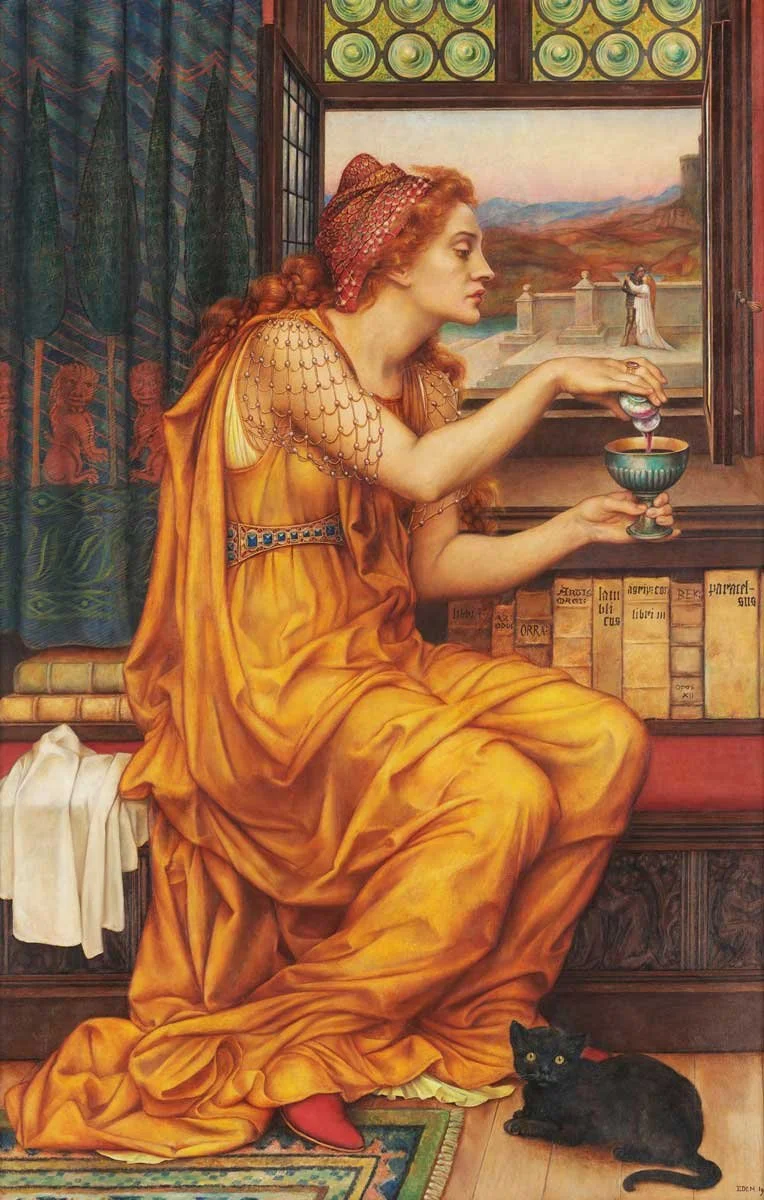
Above: Evelyn De Morgan, The Love Potion, 1903, De Morgan Collection, UK This painting depicts a beautiful witch wearing a stunning golden dress. At her feet is her familiar, a black cat, who seems startled by the viewer.
Research by Daniel Kahneman and Gary Klein (Conditions for Intuitive Expertise) describes how skilled intuition can develop through learning patterns and receiving feedback. But it also cautions that confidence and positive thinking doesn’t establish accuracy.
Just as we saw in the first section above, data, even when focused on metaphysical subject matter, is still relevant.
But your own experience of a marketing issue should outweigh what numbers say.
I’m not suggesting that all studies are wrong, but you should always examine who commissioned them, what they have measured, and mainly whether their findings apply to your customers and your business.
For you as a smaller brand, try turning a hunch into a researchable option. If you suspect customers want a fragrance-free cleanser or a raspberry scented candle, check recent requests, talk to buyers and store owners, and then do a smaller run before committing to a larger production effort. Consider what the results from your test marketing justify before expanding it.
While absolute certainty isn’t essential, you should at least be able to learn from a possible mistake.
Keep rituals in proportion
In my Friday the 13th post from last Autumn, I explored the rituals and superstitions associated with successful people. The next question is what those habits cost.
If two launch dates work equally well and one has a number you love, go with that one. However if steadfastly securing that date turns into missing a retailer deadline or confused customers - reconsider.
The same applies to an interview or simple zoom call.
For years I had a very lucky suit that I wore to important meetings - it served me well by giving me an added spark of confidence. I also have a lapis lazuli ring that I wear when I need extra clarity and protection - and I believe it works. Magical or not, many of us have lucky socks, tees, and tea blends that we believe help us through difficulty.
But before letting a belief steer larger business decisions ask yourself:
→ Can I skip this without feeling that I’ve doomed the outcome?
→ What does following it cost in time, money or missed opportunities?
→ What evidence would make me change course?
My advice? Set the intention, burn the sage, and wear your lucky shirt, but keep rituals in proportion. The moment an enjoyable practice starts to feel like just another obligation then it looses its creative value and just turns into a drag on your time.
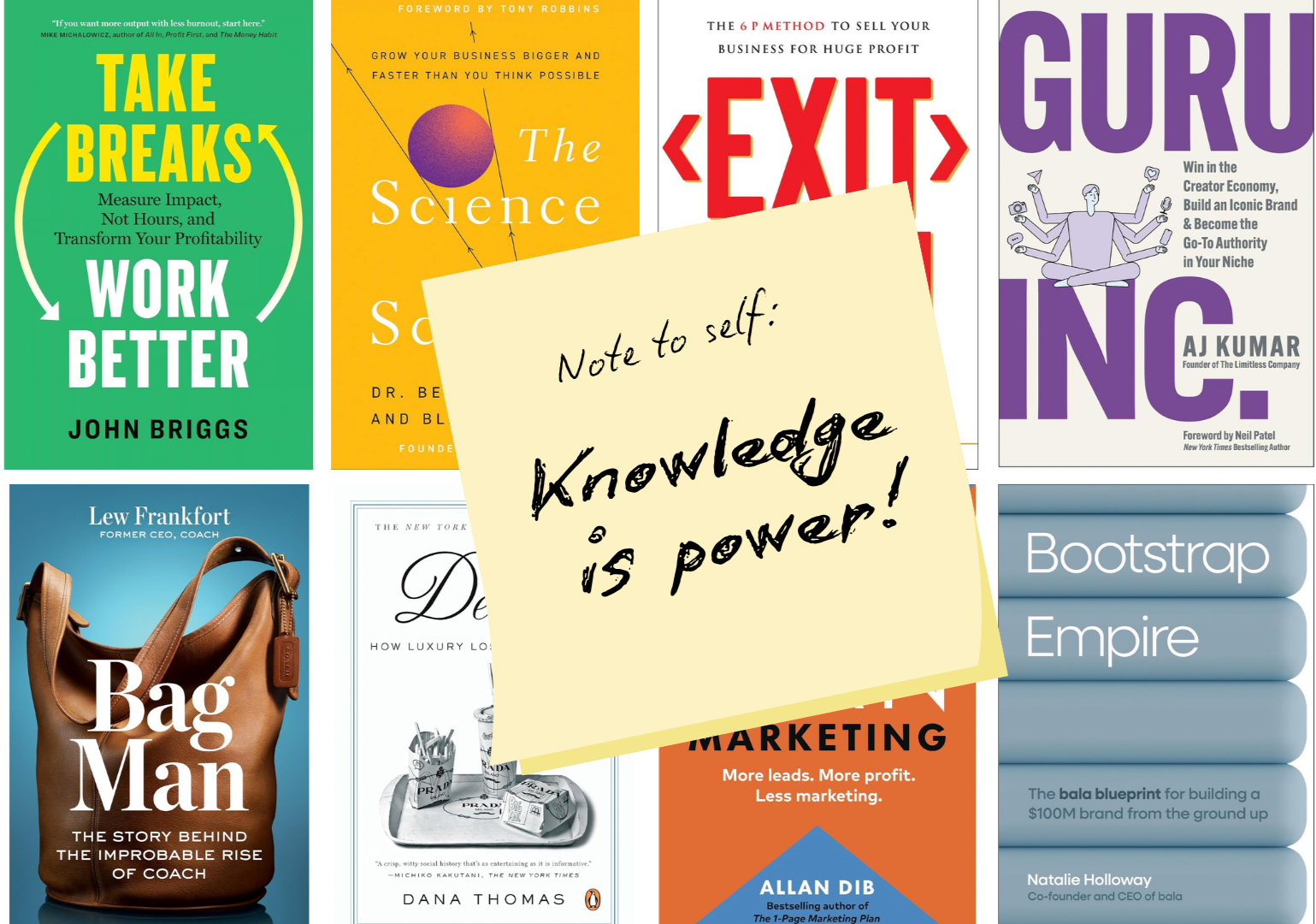
Helpful reference books to keep on hand:
» Pocket Book of Witches by Joel Levy (September 2026) A compact guide packed with the finest historical artwork, fascinating folklore, and essential traditions relating to witchcraft. Levy takes us between cultures and continents to explore the origins, history, practices, powers, and perceptions of witches.
» Wicked Plants: The Weed That Killed Lincoln’s Mother and Other Botanical Atrocities by Amy Stewart (May 2009) “A tree that sheds poison daggers; a glistening red seed that stops the heart; a shrub that causes paralysis; a vine that strangles; and a leaf that triggered a war.” Learn about more than 200 of Mother Nature’s most toxic plants.
» The Green Witch: Your Complete Guide to the Natural Magic of Herbs, Flowers, Essential Oils, and More by Arin Murphy-Hiscock (September 2017). You’ll learn how to use plants for everyday healing, and crystals, gems, stones, to help you find balance.
Frequently Asked Questions:
What is workplace witchcraft?
Workplace witchcraft is an informal label for bringing practices such as tarot, astrology, intention-setting or rituals into working life. These practices are not interchangeable, and using meditation or journaling does not automatically mean someone practices witchcraft.
Should small business owners trust intuition or data?
Use experience to identify opportunities, then examine relevant evidence before committing resources. Recent customer requests, retailer feedback and small product tests can help evaluate a hunch. Older market data should be assessed for its relevance to the decision.
Can personal rituals help with business decisions?
A personal ritual may help someone feel focused or ready to act, but that does not establish that it predicts business outcomes. Consider its cost, whether you can comfortably skip it, and whether it leads to practical action.
Should beauty brands use witchcraft or potion language?
Mystical language can fit a brand when it reflects an authentic founder story or clearly playful product concept. Keep the ingredients, purpose and supported benefits understandable, and distinguish folkloric inspiration from evidence of product performance.
Should a brand choose a lucky launch date?
A meaningful date can be a personal preference when it works with the business schedule. Retailer deadlines, stock availability, customer convenience and campaign readiness should guide the final choice.
Enjoying our marketing updates?
★ Add Boxwood Co as a Preferred Source on Google