From upscale resorts to a table at the library, people are making time to play. Here’s what’s driving the boom and how small brands can join in without manufacturing a single tile.
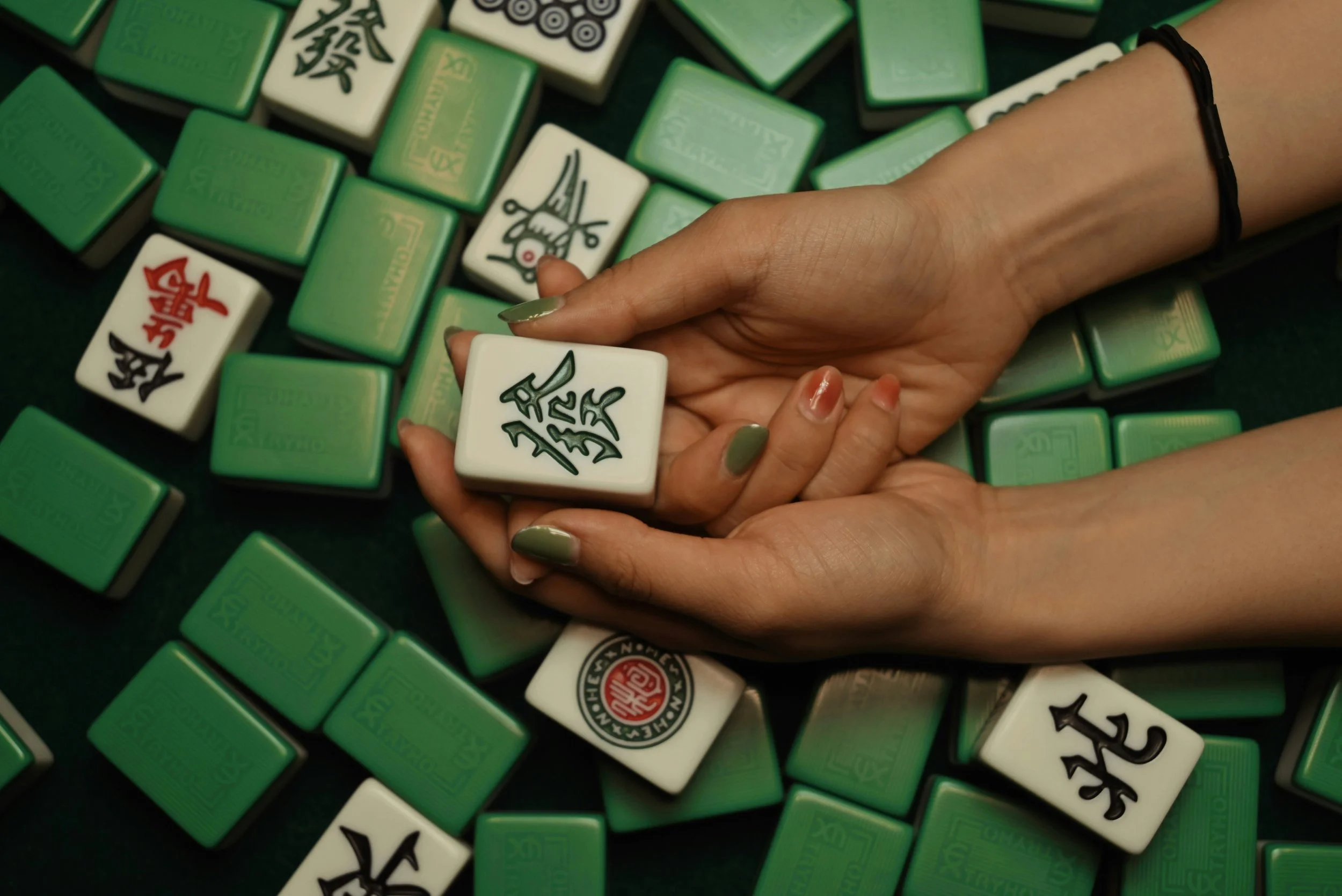
I went to a mahjong night at a resort in Calistoga the other night and, funnily enough, spent a small part of the evening thinking about Friends. In particular the episode where the guys are trying to figure out the rules to Bamboozled. If you’re not familiar with the episode, Bamboozled has a lot of rules and nuances, and so does MahJongg.
Just about everyone the other evening was enthusiastic about the game - the experienced players readily showed us newbies the ropes. There was the official National Mah Jongg League card, which lists 2026’s winning hands - then there were little cheat sheets that showed rows of bams, cracks and dots, plus winds, dragons, flowers and jokers, so the different suites would be easier to identify.
While the resort experience offered an upscale setting - I’ve also seen humble gatherings at libraries and community centers. Private clubs that play at each other’s homes are also popular. At these you can put out an entire table of small bites and give the evening its own drink. Same game, three very different ways to spend time together. And if you sell polish, rings, candles, linens or something delicious to drink, there’s room for you somewhere in that picture.
How popular is mahjong right now?
Very popular and rising with people actively searchig for someone to play with. According to reporting from ICSC Yelp searches for mahjong clubs rose 4,467% and searches for mahjong lessons rose 819% year over year for September 2024 through August 2025. (No numbers for 2026 yet).
In Eventbrite’s comparison of the first halves of 2025 and 2026, mahjong events explicitly marketed as places to meet people increased 235%, and attendance at those events rose 272%.
According to Modern Retail, Oh My Mahjong went from $1 million in sales in 2023 to $40 million in 2025, and as of October they’d already passed that figure for 2026.
Why is mahjong so popular?
Mahjong gives people something to do together that’s fun and relaxing enough to make an evening of it. If you’ve ever tried to get four adults to agree on a date for dinner, you can appreciate the advantage of having a standing game. There’s a reason to come back, a skill to get better at and, if you’re lucky, someone who remembers what it was like to be new.
I thought the complexity might be a drawback. The other night in Calistoga it gave the regulars a way to bring the rest of us in. Somebody could explain what a tile meant, and a few minutes later there was another element of the rules to learn. It takes some of the pressure off meeting people when you already have something to talk about.
The current wave is bringing new players to a game with a long social history. Mahjong originated in China, and different forms of the game have their own traditions. Historian Annelise Heinz traces its role in both Chinese American and Jewish American communities, among others. The annual card I saw the other night belongs to the National Mah Jongg League’s version of American mahjong. A brand planning a game night should ask its instructor which version they teach and tell guests what to expect.
How small brands can get in on mahjong without selling sets
A client who makes French soaps and bath products told me that at NY NOW, store buyers kept coming up to their booth asking whether they had anything with a mahjong theme. These savvy merchandisers were already imagining the assortment, and they were looking well beyond the game aisle.
Anthropologie, known for their trendsetting merchandising has gone full into the Mahjong vibe - not only do they carry gorgeous MahJong sets, but also Mahjong Jeans by Driftwood, a stylish Mahjong Table, a beaded Mahjong bag charm, a Mahjong tee, a Mahjong puzzle, a Christmas tree ornament, and a Mahj + Mix Cocktail Book.
Give people something to notice when the tiles are moving
Here’s where the marketer in me kept coming in: Naturally as I was watching I couldn’t help but make note of everyone’s swanky manicures! And rings.
A nail brand could put together a Bams, Cracks & Dots polish trio, with bamboo green, brick red and a cobalt blue borrowed from the dots.
A jeweler could put four existing rings in a game-night edit and photograph them in play.
For a hand-care brand, a quick-absorbing cream is an easy thing to sample between rounds. If it leaves your fingers slippery, the table will tell you faster than a focus group.
Make a hostess gift someone would bring to the next game
For a soap brand, how about a Tile Night set of four existing guest soaps in a simple illustrated sleeve. If the first run sells, then I’d think about a fragrance of its own.
A candle brand could try a Fourth Seat candle in green tea and cedar, with a note that makes it easy to give to whoever hosts. A tabletop brand could bundle four cocktail napkins and coasters. The little practical detail I’d work into the photos is where the glasses go. Once you’ve got the tiles and racks in front of you, there’s a lot to be said for a side table.
Decor brands could design a playing table with comfy seats and matching side tables for snacks and drinks - and don’t forget a rug to put underneath it all!
Give the evening a signature drink and snacks to match
A bar or beverage brand could make a Bamboo & Pear Fizz with pear, lime and ginger, with a sparkling version that works beautifully alcohol-free.
A specialty food shop could put together a game-night bundle with a recipe card, a mixer and snacks for a sideboard. If the regulars are taking turns hosting, you’ve given them an idea they can use next week.
Bring in someone who knows how to teach
If I owned a boutique, I’d pay a local instructor to run a beginner night or two before committing to a product run. I’d offer individual seats, make it clear people can come solo and ask the instructor to bring the equipment.
A jeweler, nail studio or beverage maker could partner with an established group and contribute one thing that improves the evening. When the people who already play want to bring a friend to the next one, you’ll have learned something a wholesale order can’t tell you.
I went to Mahjong at the resort expecting to find out what all the fuss was about. I left still needing the cheat sheet, with a much better understanding of why people put the next game on the calendar. If you’re a brand looking for a way in, try sitting down at a table first. You might come away with a product idea. You might also come away with three people to play with next Tile Tuesday.
A few questions about the mahjong trend
What’s driving the renewed interest in mahjong?
Mahjong combines an in-person social gathering with a skill people can build over time. Beginner lessons and open-play events make it easier to join, and a regular game gives people a reason to get together again.
What can a small brand sell to mahjong players besides tiles?
Start with something players or hosts already use, such as nail polish, rings, hand cream, hostess soaps, cocktail napkins, drink mixers or snacks. An edit of existing products is a simple way to gauge interest before developing a new line.
What’s the difference between the annual card and a tile cheat sheet?
The National Mah Jongg League’s annual card shows the winning hands for its version of American mahjong. A tile identification sheet helps beginners recognize the tiles in front of them.
Enjoying our marketing updates?
★ Add Boxwood Co as a Preferred Source on Google