Sophia Petrillo’s $192,000 Purse Is a Branding Lesson Hiding in Plain Sight
Estelle Getty’s famous Golden Girls handbag just sold for nearly 13 times its high estimate. For brands, the reason why may be more interesting than the price.
Picture it: a Los Angeles thrift store, 1985.
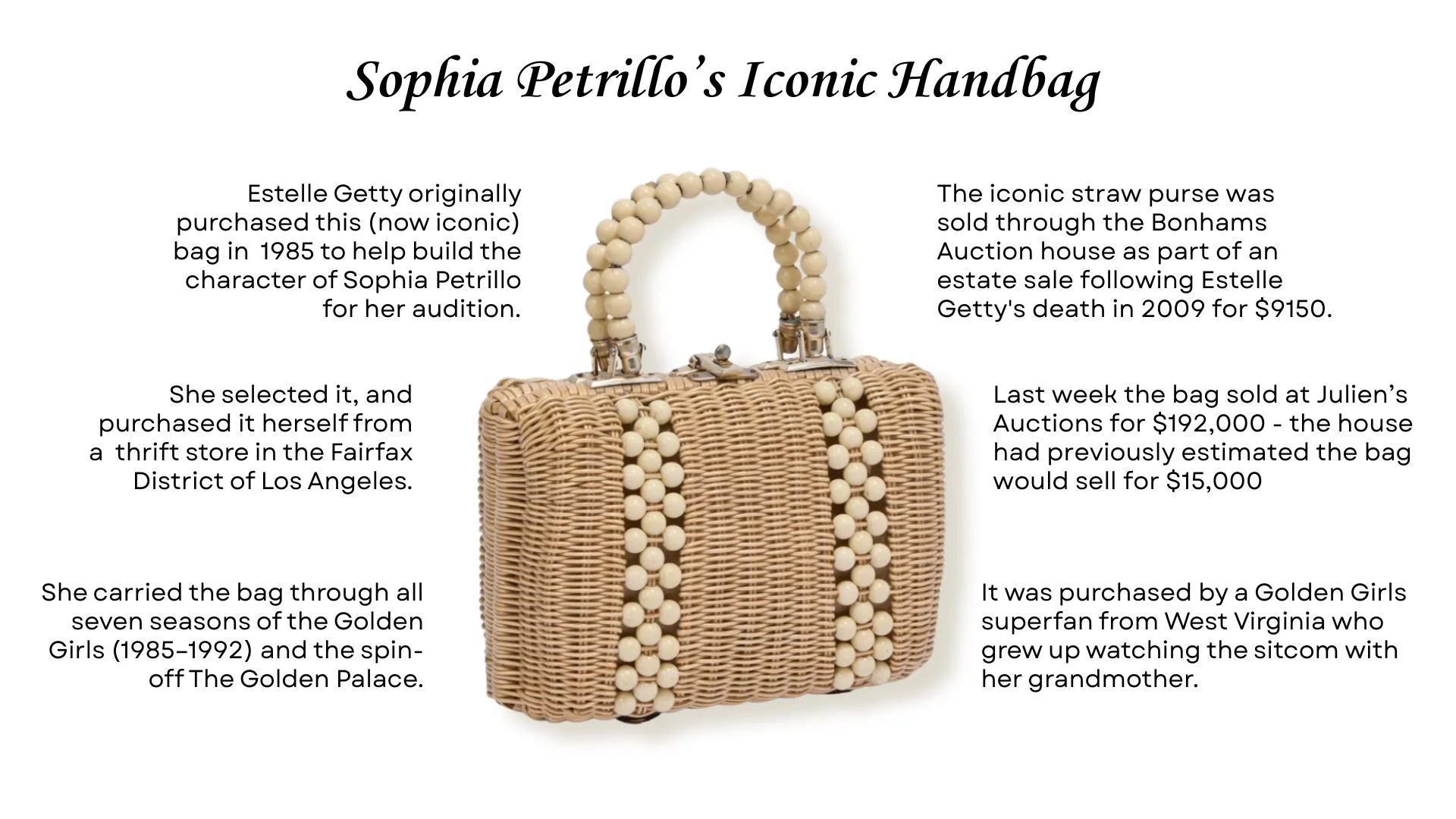
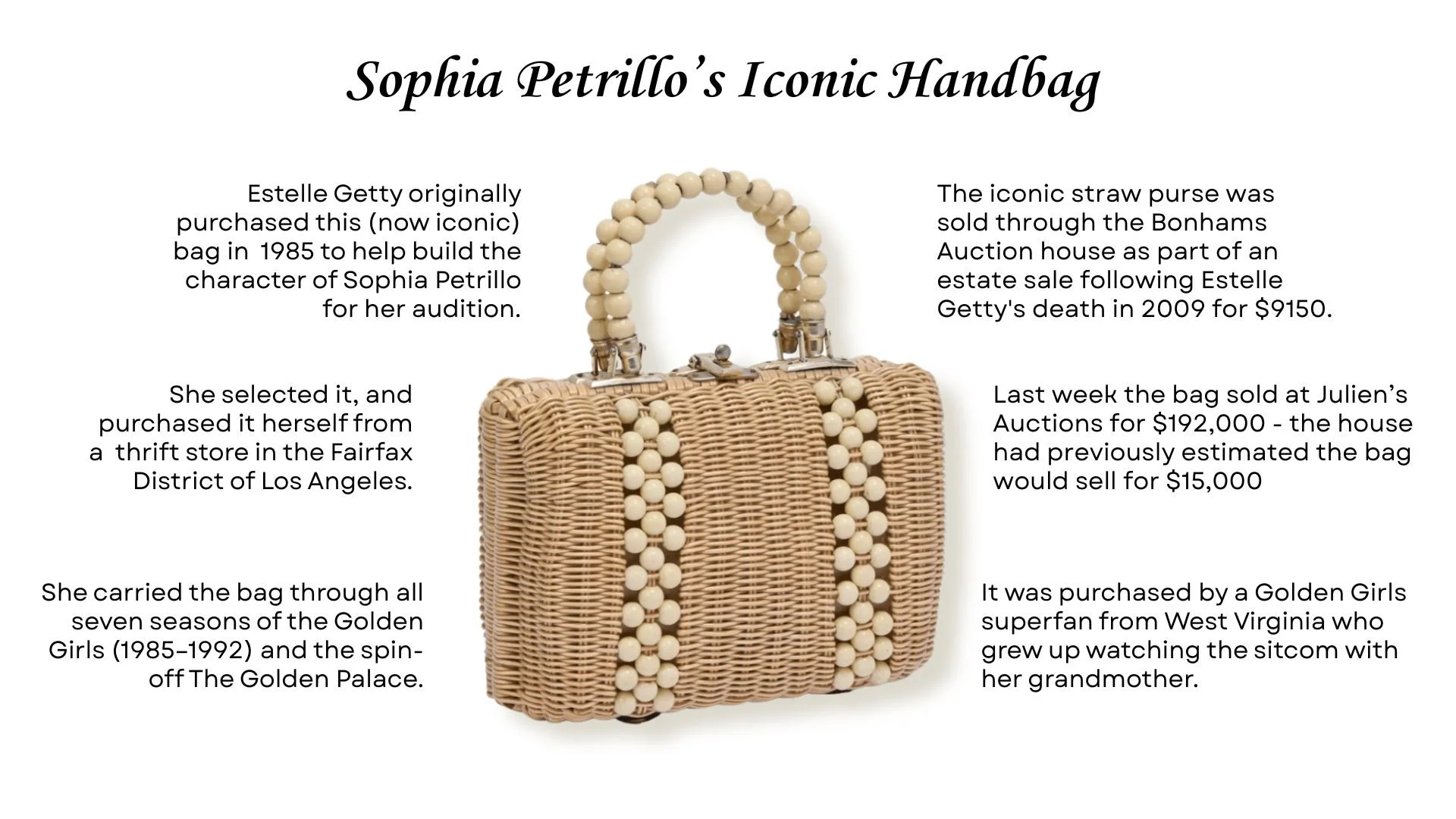
Estelle Getty is putting together a costume for an audition for a new television series called The Golden Girls. She shops through a thrift store in the Fairfax District of Los Angeles and, among other things, finds a kitschy woven straw handbag with cream colored plastic beads in great condition. What did she pay? Maybe a buck or two. Forty-one years later, that purse just sold at auction for $192,000. Now that’s golden!
If you’ve read my blog you know I’m a huge Golden Girls fan - I wrote and posted on social media about the 40th Anniversary of the show last year pretty extensively.
So this news about Sophia’s bag that’s going viral really put me in a great mood this morning, and I just had to write down my 2-cents about it.
Why did Sophia Petrillo’s purse sell for $192,000? Because after seven seasons of The Golden Girls, the handbag had become far more than a television prop. It was one of Sophia Petrillo’s most recognizable visual signatures, carrying decades of nostalgia, character recognition and emotional attachment for fans.
Julien’s Auctions had estimated the handbag at $10,000 to $15,000, so when it sold to a Golden Girls super fan for an amount that could easily buy a house in many areas of the country - it must have come as a surprise to just about everyone.
A few years back that same bag sold for $9,150 when items from Estelle’s estate were auctioned in 2009 → NOTE: 2009 was during the great recession and big splashy purchases were frowned upon by many. It may have gone for more at the time had the financial climate been better.
How Sophia Petrillo’s Purse Became Part of Her Brand
As noted above, for the 40th anniversary of The Golden Girls, I talked about the surprisingly useful marketing lessons hidden inside the show. And under Sophia Petrillo, one of those lessons was:
Protect your assets.
I wrote that Sophia’s wicker purse “wasn't just an accessory; it was her vault,” and suggested brands identify and protect the things that become uniquely associated with them.
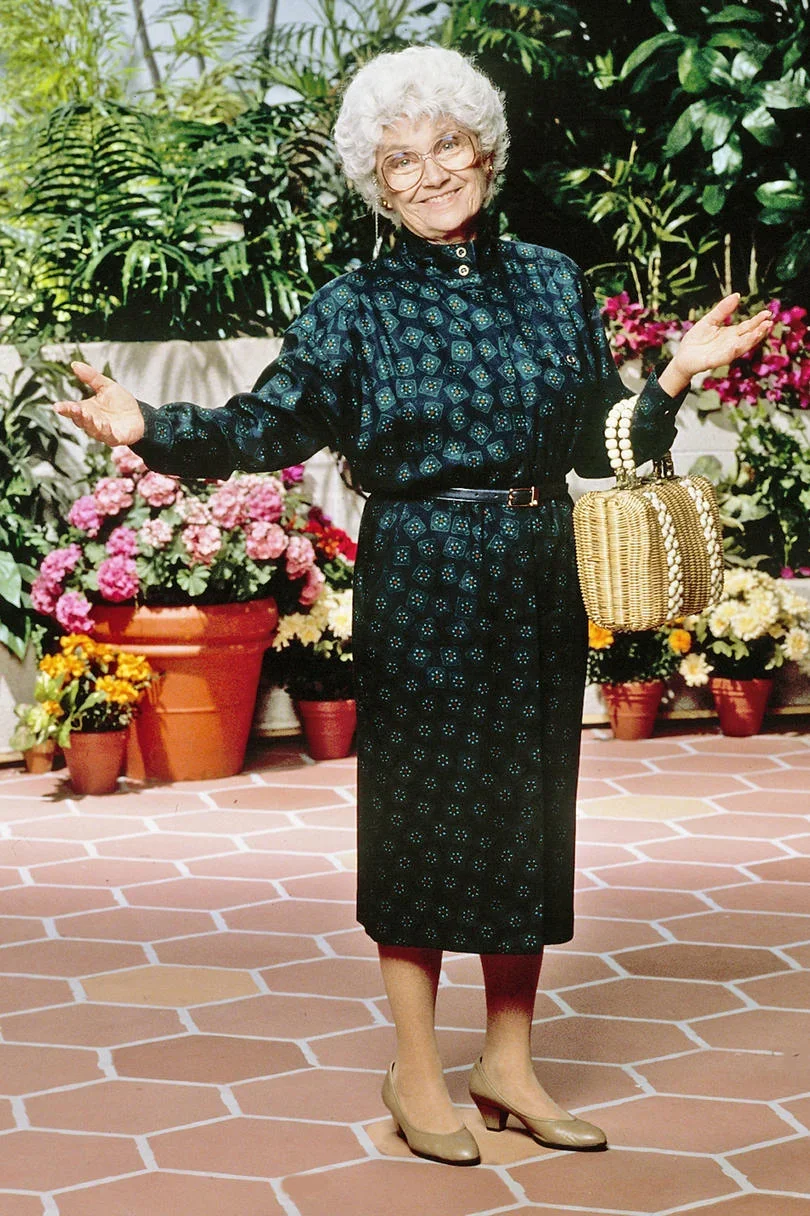
Getty carried the precious bag throughout all 7 seasons of The Golden Girls and later on The Golden Palace. It made its dutiful debut on the show on Sophia’s arm from her first scene (when she arrived at Dorothy’s house after Shady Pines burned down → which interestingly included makeup and styling that would later be changed considerably, but the bag remained an integral part of Sophia’s brand). Through repetition that bag became visual shorthand for Sophia.
That visual shorthand for a brand (in this case Sophia) is something people often underestimate.
A recognizable brand asset doesn't always begin life as something strategic or focus-grouped into existence. It can be as simple as a color, a package shape, or a catch phrase a founder always uses.
→ The value comes from consistency + recognition + meaning accumulated over time.
Here’s the Most Important Takeaway → Nostalgia = Emotional Equity
If you read my post there’s another Sophia lesson that is key: Leverage nostalgia.
The woman who purchased the purse told Women’s Wear Daily:
“I am super excited to be the new owner of this iconic piece!” she said. “I’d like to stay anonymous. I’m just a girl from West Virginia who is a huge ‘Golden Girls’ fan. I used to watch it with my grandma all the time and with my friend group growing up. I have always wanted to own that purse, and I have a fake one my boyfriend bought me, as well as a lot of ‘Golden Girls’ memorabilia. I’m just a huge fan, and all of them hold a special place in my heart. I even have a ‘Golden Girls’ tattoo on my arm.”
This statement demonstrates so well that the purse is valuable because of the way it makes people feel. This is an element of branding that great lifestyle brands understand.
A brand isn’t a logo - a brand is a mingling of memories attached to the things we repeatedly put into the world.
That’s why we’ve seen such a flurry of heritage brands reviving old packaging or reactivating hero products rather than developing new ones. (For the record the word “activation” always sounds to me like a military commander sending a troop into battle).
Your Most Valuable Brand Asset Might Not Look Valuable To You Yet
The temptation in building a brand is to develop so many SKUs that you have a product that will appeal to everyone - this is particularly true for self care and accessory companies. In the process the identity of your brand gets diffused and fractured into a thousand pieces.
But The Golden Girls brand offers an important lesson. The characters were distinctive and the visual cues were consistently on-brand. As I wrote in my 40th-anniversary piece, the show's endurance comes largely from clear voices, storytelling, emotional resonance and community.
Why Did Sophia Petrillo’s Purse Sell for $192,000?
That Vintage Bag is the Ultimate "Golden Girls" Symbol: Unlike minor props, Sophia’s purse was practically a character itself. It’s well documented that Estelle had famously picked the bag out herself at a thrift store to build Sophia’s look. It appeared in her very first scene and remained glued to her arm through all seven seasons of The Golden Girls and its spin-off, The Golden Palace.
Deep Emotional Meaning: In a famous 1996 interview on The Rosie O'Donnell Show, Getty explained the deeper meaning she gave the prop: "When people get old, and they're displaced... what they keep in their purse is the most important things in their lives, and putting down the purse is like putting down your life."
Estelle Getty's Prophecy: In that same interview, Getty accurately predicted the future bidding war, stating: "Now I have it. And whoever wants it is going to have to pay heavy money for it." This clip circulated heavily among fans, turning the auction into a self-fulfilling prophecy.
The "Superfan" Factor: The auction tapped into a highly competitive market of collectors driven by deep generational nostalgia. The winning bidder was a dedicated fan who grew up watching the show with her grandmother and was willing to spend "Birkin bag money" to secure the ultimate piece of television history.
Other Golden Girls Memorabilia
Beyond Sophia’s straw purse, The Golden Girls featured several iconic props that defined the show's humor, running jokes, and cozy Miami aesthetic.
Betty White’s Director’s Chair & Scripts: Following Betty White's passing, her personal on-set director's chair from The Golden Girls set went up for auction in 2022, fetching $76,800. Her hand-annotated production scripts and wardrobe pieces were also sold to private collectors.
Rue McClanahan's Wardrobe: Rue McClanahan (Blanche) was famously allowed to keep her entire wardrobe from the show. After her passing, hundreds of her iconic dresses, jewelry, and decorative items from her estate were auctioned off to fans and collectors globally.
FAQs
How much did Sophia Petrillo’s purse sell for?
Estelle Getty’s signature Golden Girls purse sold through Julien’s Auctions for $192,000, far exceeding its original auction estimate of $10,000 to $15,000.
Was Sophia Petrillo’s purse really used on The Golden Girls?
Yes. The straw handbag became one of Sophia Petrillo’s signature accessories and appeared with Estelle Getty throughout The Golden Girls and later The Golden Palace.
Why was Sophia Petrillo’s purse so iconic?
Its repeated appearance made it instant visual shorthand for Sophia. Over time, the purse accumulated the nostalgia, memories and affection viewers associated with the character herself.
What can brands learn from Sophia Petrillo’s purse?
Recognizable brand assets become more valuable through consistency. A color, package, phrase, product shape or other seemingly ordinary detail can acquire enormous emotional value when audiences encounter it repeatedly over time.