How the Intersection of Purpose Driven Brands and Thrift Culture are Shaping the Economy in 2026
Inflation and Too Many Brands are Causing a Shift in Consumer Priorities.
Purpose driven brands are making 2026 a year filled with rich storytelling and upcycled everything
When Purpose Driven Meets Mended Culture
There’s a sweet brand that I follow on Instagram, and every time one of their posts comes across my feed it’s a stop and read the comments moment.
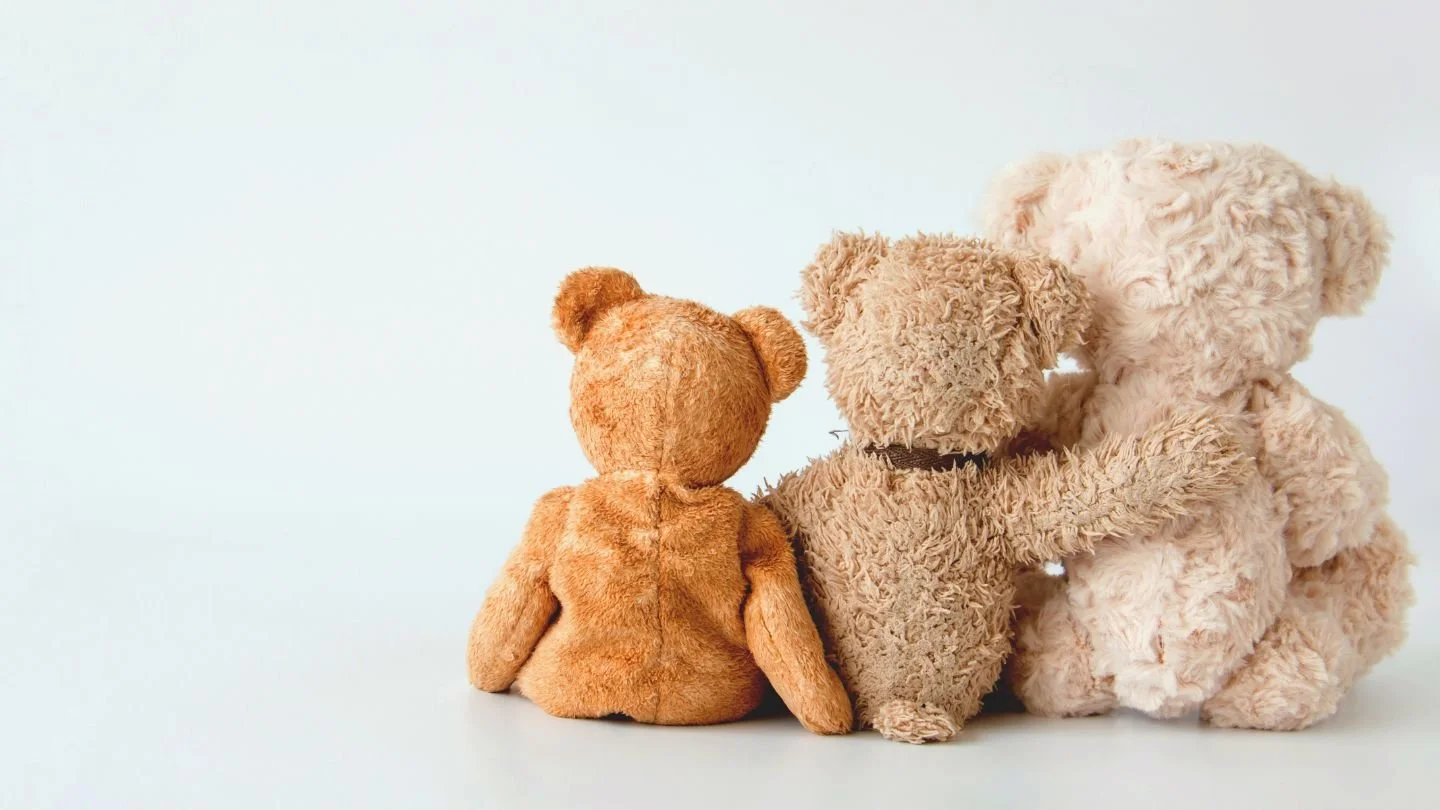
Loved Before London is a bonafide Teddy Bear and soft toy rescue agency - and their mission is a relatively simple one: make us all care about the things we buy, and make sure when we’re done with them they are passed along responsibly.
Founded by Charlotte Liebling in 2019 and based in the UK, Loved Before London cares deeply about the idea that a child’s toy - something that’s been imbued with the joys and tears of childhood - could be tossed into a landfill to rot.
“Everyone has loved a teddy,” Charlotte told the New York Times recently, “and, you know, has memories with one, and has one that they call a best friend.”
The Loved Before London social feeds are filled with stories of toys that have been rescued, told in the most endearing and imaginative way. They make me not only want to buy every stuffy on offer, but to scoop up every pre-owned stuffed toy I see at thrift stores, garage and estate sales.
And I’m not the only one, Loved Before London posts hundreds of adoptable stuffed toys every Monday - usually selling through within hours to fans in more than 25 countries.
While Loved Before London is a for-profit company with a staff of about 18, they donate a large portion of profits to charities. This blend of eco-friendly, thrift and mend culture, combined with a charitable through-line is a what is winning consumers in the current economy.
Why Loved Before London’s business model works:
The mission is crystal clear and instantly understandable
Customers participate in the story, not just observe it
Sustainability is embedded in the business model, not bolted on
Loved Before doesn’t say “we care about the planet.” It proves it — one toy at a time. That clarity makes the brand:
Highly memorable
Press‑friendly
Social‑media‑native
Algorithmically legible
In short: it’s purpose you can hold in your hands.
If you’re thinking the Loved Before London mindset and mission is a cute but quaint outlier, you’re wrong. Walk into any thrift store, estate sale, vintage or specialty shop that sells some form of second hand product and make note of the long lines at the cash register.
The pre-owned boom is hitting the watch, handbag, and jewelry market in profound ways, with sales of used watches surpassing sales of new watches. But it’s not iconic pre-owned luxury items that are in hot demand, everyday products are being scooped in over shopping for new in numbers never seen before.
For years, loyalty was built on points, perks, and punch cards. In 2026, that model feels … well, quaint.
Today’s loyalty is rooted in:
Recognition
Shared values
Community
Emotional resonance
Many consumers these days don’t only wonder if a product is a good value. They also ask themselves: “Does this align with who I am and how I want to live?”
That’s why purpose‑driven brands are outperforming look‑alikes. Causes and positive business practices give people a reason to choose, a feeling that by purchasing a certain product they’ve voted with their feet, and in the process improved the world.
From an AI‑powered discovery standpoint, this matters too: brands with clear missions, consistent storytelling, and credible third‑party validation (press, community participation, measurable impact) are far easier for generative systems to understand, categorize, and recommend.
Purpose isn’t a halo you polish for effect. It’s infrastructure that sets your brand apart from the masses.
Say Merry Thriftmas
At the same time that purpose‑driven brands are gaining traction, consumer behavior itself is shifting — fast.
Secondhand shopping has exploded, and not just because it’s cheaper. The stigma once attached to shopping at thrift stores has fallen, opening the door to secondhand gifts, as noted on Modern Retail this week. “The RealReal is seeing a 32% increase in Gen-Z buyers compared to 2024” writes author Allison Smith. “Data shows Gen Z is significantly more likely to gift secondhand items. About 86% of Gen Z shoppers say they’re more likely to purchase a secondhand holiday gift this year compared to last year, according to an eBay spokesperson.”
Consumer trends are a blend of motivations:
Cost consciousness
Sustainability concerns
Desire to reduce waste
Support for charitable missions
Appetite for unique, story‑rich items
When Purpose Driven Meets Thrift Culture
Thrift and charity shops offer products at tag sale prices, and they have the added marketing benefit of being purpose‑driven brands in and of themselves. When we purchase from The Goodwill, or your local outreach charity shop, we’re:
Reducing demand for new production
Keeping items out of landfills
Funding social services or community programs
Even when price is the primary motivator, purpose is a huge motivator. While you, the shopper, may not articulate it that way necessarily, but the emotional payoff is real: I saved money and did something good. That dual reward is powerful — and it’s reshaping expectations across retail.
Recent thrifting data reinforces that this is not a fringe movement:
The U.S. secondhand market is growing at double‑digit rates year over year
A significant share of consumers now shop secondhand regularly: according to a recent report compiled by CapitalOne approximately one-third of all clothing and apparel items purchased in the U.S. over the past year were secondhand. Resale has grown by 650% since 2018; 60% of the projected secondhand market growth through 2029 is expected to result from new thrift shoppers. In 2023, clothing resale grew fifteen (15) times as fast as the general retail apparel sector.
Sustainability is a top motivator alongside price
While GenZ is credited with fueling the trend, consumers of all ages are engaging in thrifting.
The Saturation Paradox: Why Market Overlap is Eroding Brand Value
The lifestyle sector, specifically skincare, self-care, and home fragrance, is currently grappling with extreme market saturation. While I have spent my career championing entrepreneurship, the recent influx of new brands in the lifestyle sectors (particularly selfcare, candles, and food) have shifted from healthy competition to a state of diminishing marginal utility for the consumer.
The Commoditization of "Newness"
What appears to be a boom in creativity is, upon closer inspection, a cycle of recycled aesthetics and redundant formulations. When brands prioritize speed-to-market over R&D, we see:
Formula Homogeneity: High-volume "white labeling" resulting in near-identical INCI (ingredient) lists across competing price points.
Aesthetic Convergence: The "Instagram-minimalist" or "Gen-Z bright" packaging archetypes that make product differentiation nearly impossible at the shelf level.
Influencer Fatigue: A standardized marketing playbook that treats authenticity as a metric rather than a mission.
The Shift to "Durable" Consumption
This lack of differentiation has triggered a measurable shift in consumer behavior. Data shows that shoppers are increasingly opting for circular economy models: thrift, resale, and mended goods. This is a rational response to "newness fatigue." Consumers are migrating toward goods that offer a proven Cost-Per-Wear (CPW) or historical value, rejecting the "churn and burn" cycle of modern lifestyle launches.
The Bottom Line: Purpose as a Competitive Moat
In a saturated market, purpose-driven marketing functions as more than just a brand pillar; it is a strategic differentiator. For a brand to achieve long-term viability, it must move beyond trendy ingredients and define its "right to win" through:
Supply Chain Transparency: Moving from claims to verifiable data.
Radical Differentiation: Solving a specific, underserved consumer pain point rather than chasing quarterly trends.
Authentic Mission: Ensuring the brand's "Why" is reflected in its unit economics and lifecycle, not just its copy.
So Where Does this Trend Leave Brands With No Reselling Leverage?
While fashion, jewelry, decor brands can all incorporate some level of reselling (for example Diane von Furstenberg offers a Rewrap selling portal) some brands really cannot engage this trend from a variety of health and safety standpoints. Candles, cosmetics, skincare, food - not great candidates for reselling.
But not revamping, mending, or reselling products or reselling doesn’t count a brand out from the purpose driven trend.
There are many ways to align with intentional consumption. Here are some ideas:
Purpose‑Driven Campaign Ideas for Lifestyle Brands That Sell New Products and Services
For candles and skincare, your "purpose" probably will fall into two categories: Environmental (the physical footprint) or Emotional (the mental/physical well-being of your customer).
Because these are sensory-heavy products, your campaign should bridge the gap between a "luxury purchase" and a "meaningful contribution."
1. The "Clean Air & Reforestation" Campaign (Candles)
Many consumers are becoming aware of the pollutants in paraffin wax and synthetic fragrances.
The Purpose: Reversing the carbon footprint of "Cozy."
The Hook: "The Breathable Forest." For every candle sold, your brand funds the planting of native, scent-specific trees. If it’s a Sandalwood candle, you fund Sandalwood conservation.
The Campaign Content: * The "Unboxing" Experience: Include a seed-embedded dust cover (the paper on top of the candle). Once the candle is finished, the customer uses the jar to plant the wildflowers.
Visuals: Side-by-side comparisons of your clean-burning wax vs. traditional soot, emphasizing respiratory health.
The Message: "Light a flame here, plant a tree there."
2. The "Self-Care is Not Selfish" Campaign (Skincare)
The skincare industry often preys on insecurities (anti-aging, fixing "flaws"). This flips the script.
The Purpose: Mental Health Advocacy & Body Neutrality.
The Hook: "The Mirror Reflection Project." Partner with a mental health non-profit. On every bottle, instead of "Directions for Use," include a "Ritual of Affirmation."
The Campaign Content: * The "No-Filter" Launch: Use zero-retouching photography. Feature real skin textures—scars, pores, and hyperpigmentation—as signs of a life well-lived.
Micro-Donations: Donate a portion of proceeds to provide therapy sessions for youth struggling with body dysmorphia.
The Message: "Skincare is about how you feel in your skin, not just how you look to others."
3. The "Upcycled Beauty" Campaign (Skincare/Candles)
Focus on the "Hidden Waste" in the beauty industry (like discarded fruit seeds or coffee grounds).
The Purpose: Zero-Waste Circularity.
The Hook: "The Second Life Collection." Use ingredients that are by-products of other industries (e.g., oils pressed from "ugly" fruits rejected by grocers, or repurposing candle jars through a refill program).
The Campaign Content: * The Refill Subscription: Offer a "pouch-to-jar" refill system that reduces plastic waste by 80%.
Educational Series: "Meet the Farmer." Show how you’re saving 500 lbs of "waste" fruit by turning it into high-end face oil.
The Message: "Luxury doesn't have to be wasteful."
4. The "Sensory Sanctuary" Campaign (Candles)
Focus on the light/darkness aspect of candles for a specific social cause.
The Purpose: Support for those in "Darkness" (e.g., domestic violence survivors or those without electricity in developing nations).
The Hook: "Buy a Light, Give a Light." For every luxury candle sold, you provide solar-powered lamps or contribute to safe-house utilities for families in transition.
The Campaign Content: * The "Blackout" Event: A social media campaign where you post only black squares for 24 hours to highlight the "unseen" communities you're helping, ending with the launch of the candle.
The Message: "Bringing warmth to your home and light to theirs."
5. The "Ugly but Delicious" Campaign (Food)
The Purpose: Fighting Food Waste.
The Narrative: Millions of tons of produce are thrown away annually because they don’t look "perfect" for grocery shelves. We think that’s a tragedy of taste.
The Hook: "The Rescue Recipe." Source your primary ingredients from "misfit" produce—the curved cucumbers, the bruised tomatoes, or the small apples.
Campaign Content:
The "Misfit" Mascot: Create a personality around a piece of "ugly" fruit that was saved to make your product.
Impact Tracker: On the back of the bag/jar, state exactly how many pounds of food were diverted from landfills to create that specific batch.
The Message: "Perfect taste doesn't need a perfect face."
6. The "Soil-to-Soul" Campaign (Food)
The Purpose: Regenerative Agriculture & Soil Health.
The Narrative: Modern farming is stripping the earth of its nutrients. We aren't just taking from the land; we are healing it.
The Hook: "The 1% for Earth." Dedicate 1% of every sale to a "Farmer Transition Fund" that helps traditional farmers switch to regenerative practices (which sequester carbon and restore biodiversity).
Campaign Content:
The "Transparent Map": Use a QR code that shows the exact farm where the ingredients were grown, including a "Soil Health Score" for that farm.
Educational Series: Short videos explaining why healthy dirt = more nutrient-dense food for the consumer.
The Message: "Better for the earth, better for you."
Avoid "Purpose-Washing"
To make these campaigns authentic, ensure your brand follows the "Say-Do-Gap" rule:
Say: State your commitment clearly.
Do: Implement a concrete, measurable action (not just a donation).
Gap: Minimize the distance between your marketing and your operations. If you're preaching sustainability, your packaging can't be non-recyclable plastic.
Final Takeaway
The rise of thrift culture, Thriftmas, and purpose‑driven brands aren’t separate trends. They’re symptoms of the same shift:
Consumers want their purchases to matter.
Loved Before London proves what happens when purpose is operational. Thrift culture proves consumers are ready.
The brands that win next won’t just sell products — they’ll offer participation, values, and meaning.
And in 2026, that will be the strongest loyalty program you can offer.
FAQs
Are purpose‑driven brands more successful?
Purpose‑driven brands tend to be more memorable, earn stronger loyalty, and benefit from increased visibility — especially when purpose is authentic and operational.
Why is thrifting becoming more popular?
Thrifting combines affordability, sustainability, and social impact, aligning with modern consumer values.
Can brands selling new products still be purpose‑driven?
Yes. Purpose can be expressed through sourcing, packaging, participation programs, storytelling, and community partnerships.
What is Thriftmas?
Thriftmas refers to the growing acceptance of secondhand gifting during the holiday season as a thoughtful and sustainable choice.