Things I’ve Learned From Doing Jigsaw Puzzles
Puzzles are more than just a past-time … they’re therapy too.
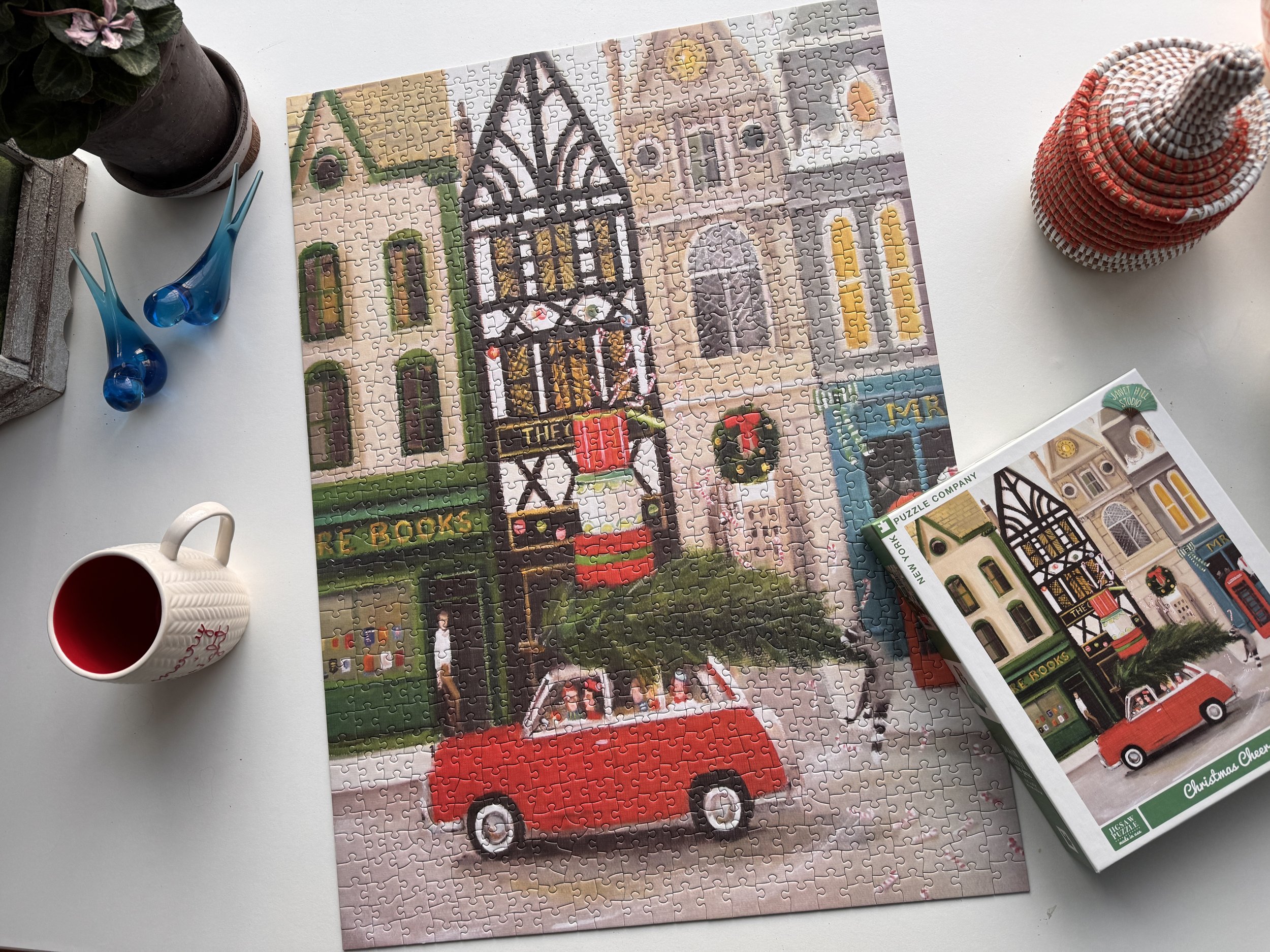
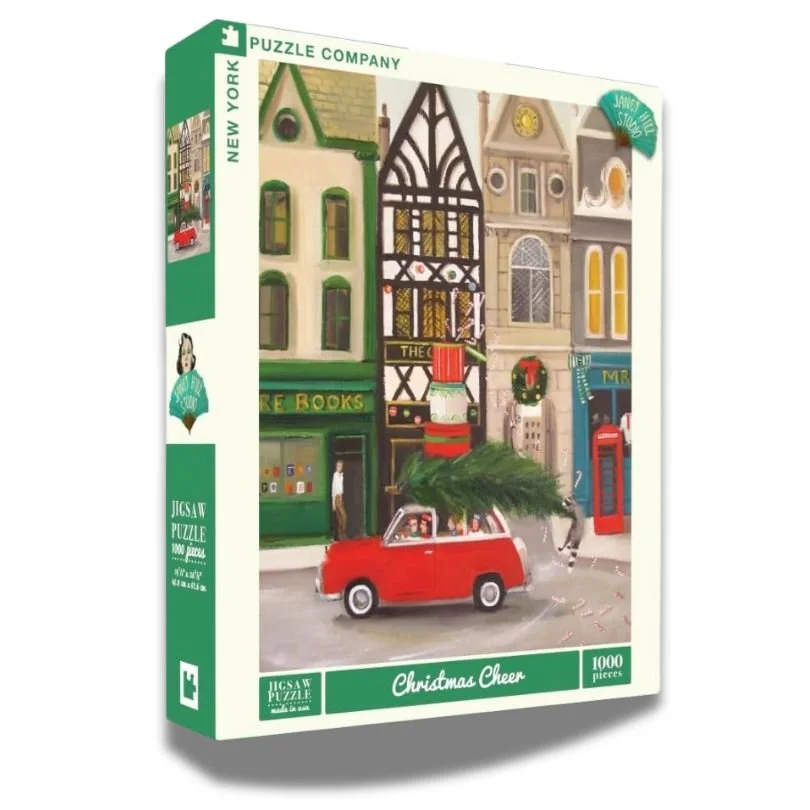
Christmas Cheer Puzzle from New York Puzzle Company
Jigsaw puzzles help small business owners improve creativity, focus, and strategic thinking by engaging the brain without digital distraction. They encourage patience, pattern recognition, and big-picture awareness—skills essential for founders navigating complex decisions.
With the short, cold days of Winter comes fun passive past times like reading, holiday movie watching, and puzzles!
I started doing jigsaw puzzles in the Winter when I moved to Connecticut years ago. On the surface it may seem like a useless thing to spend time on - I mean, you waste hours staring at little bits of cardboard, carefully fitting them together, only to rip the whole thing apart once you’ve set the last piece into place.
But puzzles are also a fascinating way to put your conscious mind into neutral and let your subconscious run wild. It’s a lot like ideas you get in the shower - you’re thinking about the pieces and where they go, while at the same time you’re mentally rolling through every back-burned idea you’ve had lately.
Here are a few things I’ve learned:
Beware of false positives: often pieces that seem to fit are just wrong, and leaving them in the wrong spot messes up the whole picture. Just imagine all the times you thought you had a perfect situation, only to discover they’re just in the wrong spot in your life puzzle. If it had stayed there your whole life story would have been different.
All the pieces are there: you just have to be patient and find them. Sometimes you think you need to force a situation when really if you wait to see what crops up, you’ll find the right situation/person/ect.
Sometimes pieces you think should be obvious (from your pile of pieces) such as an edge piece, a particular color or pattern, aren’t easy to find. Ever searched for the perfect soulmate/book/dress only to be disappointed? Be patient it will eventually arrive.
Why Jigsaw Puzzles Are Secret Weapons for Creative Entrepreneurs.
They create white space without a screen.
Most of us claim we want “thinking time,” but then we fill it with scrolling, podcasts, or half-listening to webinars. Puzzles give your hands something to do while your mind finally gets a breather. No notifications. No metrics. Just enough structure to keep you present—without hijacking your attention. This is often when the best ideas surface: product tweaks, content angles, solutions you couldn’t force at your desk.
They train pattern recognition (a.k.a. strategy muscle).
At first glance, a puzzle looks like chaos. Over time, you start to notice repeating colors, subtle shapes, negative space. Business works the same way. You begin to see which efforts compound, which ones are red herrings, and which “almost right” ideas don’t actually belong. Puzzling reinforces the habit of stepping back and asking, What’s actually part of the picture here?
They reward patience over urgency.
There is no rushing a puzzle. No hack. No shortcut. You can’t brute-force it without paying for it later. Sound familiar? For founders used to reacting fast, puzzles quietly retrain your nervous system to tolerate slow progress—something essential for long-term brand building, audience growth, and sustainable revenue.
They help you hold the big picture while working on tiny details.
You’re constantly toggling between micro (this one oddly shaped blue piece) and macro (ah, this must be the sky). That’s exactly the mindset required to run a small business: obsess over details without losing sight of the brand story, the customer experience, or the long-term goal.
They build confidence through visible progress.
In business, progress can feel abstract—especially in the winter months when sales slow and launches are quiet. Puzzles give you a rare thing: tangible forward motion. Every small win stays put. That sense of completion can be incredibly grounding when everything else feels like it’s still “in progress.”
They remind you that unfinished doesn’t mean broken.
A half-finished puzzle isn’t failing—it’s becoming. Sitting with something incomplete, without panicking or scrapping it, is a skill most entrepreneurs need to relearn. Not every idea needs to be monetized immediately. Some just need time on the table.
A Winter Practice Worth Keeping
For creative founders, puzzles aren’t about killing time—they’re about protecting thinking time. They’re a way to stay mentally engaged without burning out, to let ideas simmer instead of constantly stirring the pot.
Which brings me to my favorite winter ritual: a great puzzle, a mug of something warm, and absolutely no expectation that I need to produce anything while I’m doing it. Ironically, that’s usually when the best ideas show up.
(And yes—below are a few puzzles I’ve loved lately, chosen for their artwork, piece quality, and ability to pull you just far enough out of your head.)
How to Choose a Puzzle Based on Your Brain Mood
Not all puzzles are created equal, and neither are our brains, especially in winter. The trick isn’t finding the best puzzle; it’s finding the right puzzle for the mental state you’re in.
Think of puzzles the way you think about work sessions: deep focus, light admin, creative wandering, or total decompression.
🧠 When Your Brain Is Fried (a.k.a. Decision Fatigue Mode)
Go for:
500–750 pieces
Large, clearly defined sections
Strong color blocks or obvious imagery (illustrations, botanicals, vintage posters)
Why it works:
Your brain doesn’t need another challenge—it needs something absorbing but forgiving. These puzzles let you make progress without overthinking, which is often when clarity quietly returns.
Founder translation: This is the puzzle equivalent of clearing your inbox before a big idea suddenly clicks.
🎨 When You’re Creatively Stuck but Not Exhausted
Go for:
750–1,000 pieces
Artistic illustrations, abstract patterns, or painterly scenes
Slightly tricky color gradients or repeating motifs
Why it works:
These puzzles require just enough problem-solving to wake up your pattern recognition without tipping into frustration. They’re excellent for shaking loose ideas that feel “almost there.”
Founder translation: You don’t need inspiration—you need motion.
🔍 When You Want Deep Focus Without Screens
Go for:
1,000+ pieces
Subtle color palettes (monochrome, landscapes, night scenes)
High-detail imagery
Why it works:
These puzzles demand sustained attention and patience. Perfect for days when you want to disappear into something methodical and emerge calmer, clearer, and oddly accomplished.
Founder translation: This is long-game thinking disguised as a pastime.
🌿 When You’re Mentally Busy but Emotionally Fine
Go for:
Collage-style puzzles
Whimsical themes, typography, or eclectic imagery
Puzzles where you can jump around instead of working linearly
Why it works:
They let your mind roam while your hands stay occupied. Ideal for processing ideas, decisions, or half-formed plans without forcing conclusions.
Founder translation: Strategic thinking happens when you stop interrogating it.
❄️ When You Need Comfort, Not Growth
Go for:
Familiar scenes (homes, libraries, cozy interiors)
Nostalgic or seasonal imagery
Puzzles you could finish slowly over several days
Why it works:
Sometimes the win is simply staying grounded. Comfort puzzles regulate your nervous system—and a regulated nervous system makes better business decisions.
Founder translation: Rest is productive, even if capitalism disagrees.
Here are some favorites:
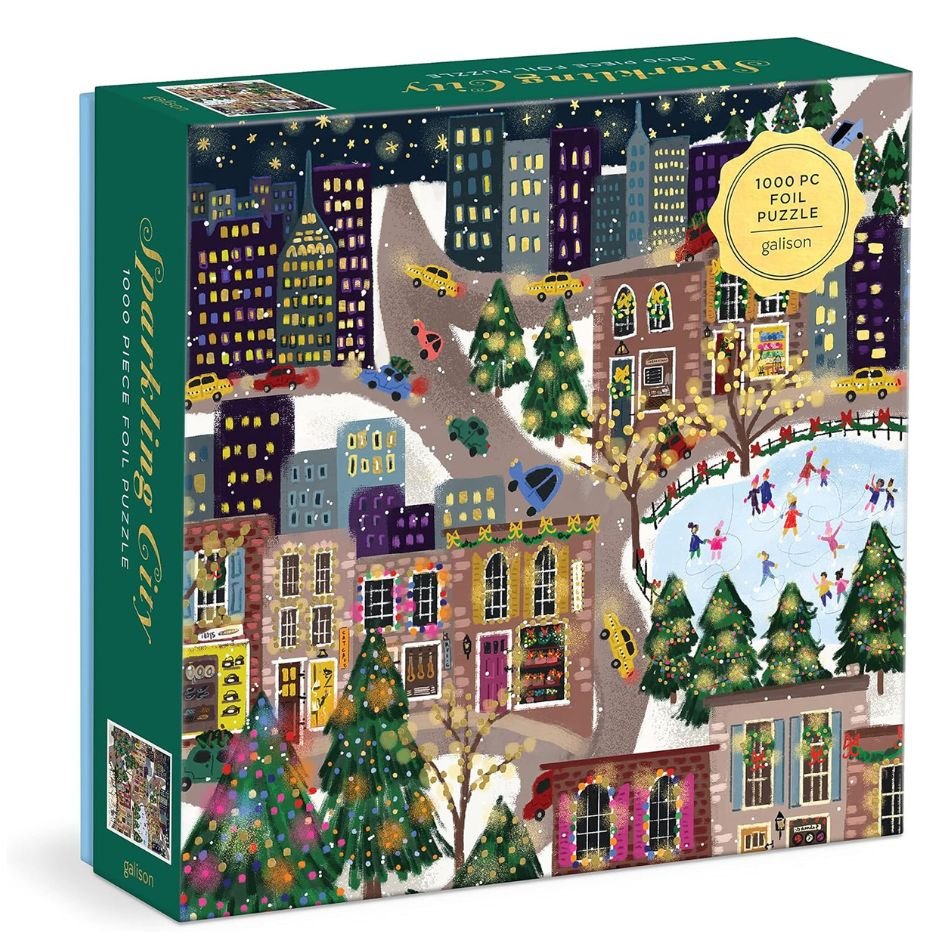
Best for Deep Winter Focus
Galison Sparkling City: 1000 Piece Foil Puzzle ~ features gold foil accents on a shimmering image of colorful merriment in the city. The box includes an insert with the full puzzle image for reference.
This is one in a series of really charming, foil embossed puzzles that you’ll enjoy. It has a lot of unique areas of color so you won’t get hung up on trying to fit piece after piece into the same spot. Seeing the whole picture emerge at the end is really fun.
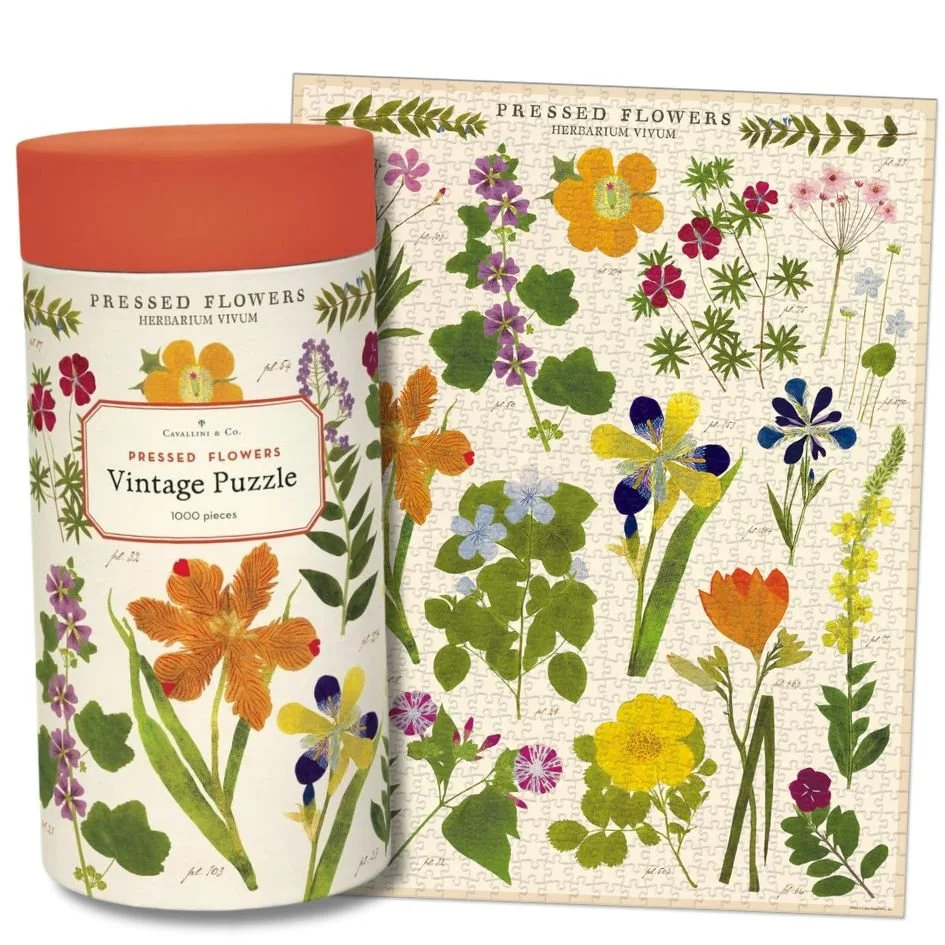
Best for Creative Block
Cavallini & Co Vintage Pressed Flowers Puzzle: Beautiful vintage flowers will help get you into a fresh, creative mood. Enjoy assembling this beautiful 1000 piece Pressed Flowers puzzle, designed with vintage illustrations from the Cavallini archives. Packaged in a 10 inch long cardboard tube, with a muslin bag to hold puzzle pieces inside. Finished puzzle measures 22"x28"
Best for Burnout Days
Christmas Cheer by Janet Hill - a fun but mildly challenging 1000 Piece Jigsaw Puzzle for Adults from the New York Puzzle Company. Janet Hill is a celebrated painter and children's book author/illustrator. Her elegant and nostalgic style is really fun this time of year. I’ve done this one myself (see the featured photo) and really enjoyed it.
FAQs
Are jigsaw puzzles good for creativity?
Yes. Jigsaw puzzles activate pattern recognition and problem-solving areas of the brain, which can spark creative thinking and help ideas surface naturally—especially when the mind is relaxed.
Can puzzles help with business strategy?
Surprisingly, yes. Puzzles train patience, big-picture thinking, and the ability to work through complexity—skills directly transferable to running a small business.
Why do founders get ideas while doing puzzles?
Because puzzles occupy the conscious mind just enough to allow subconscious thinking. This is similar to why ideas often appear in the shower or on walks.
What size puzzle is best for mental focus?
For light focus, 500–750 pieces work well. For deeper concentration and strategic thinking, 1,000 pieces or more encourage sustained attention.
Are puzzles better than screen-based downtime?
For many people, yes. Puzzles offer cognitive engagement without notifications, blue light, or information overload, making them ideal for creative recovery.