Foodie Flip-Flop! How lifestyle brands are creating food experiences, and food brands are creating lifestyle products.
Food-based marketing works for lifestyle brands because food creates emotional trust, daily engagement, and longer content shelf life. When fashion or beauty brands appear in food moments—such as coffee trucks, pop-up cafés, or recipe content—they become part of everyday decision-making instead of waiting for seasonal purchases.
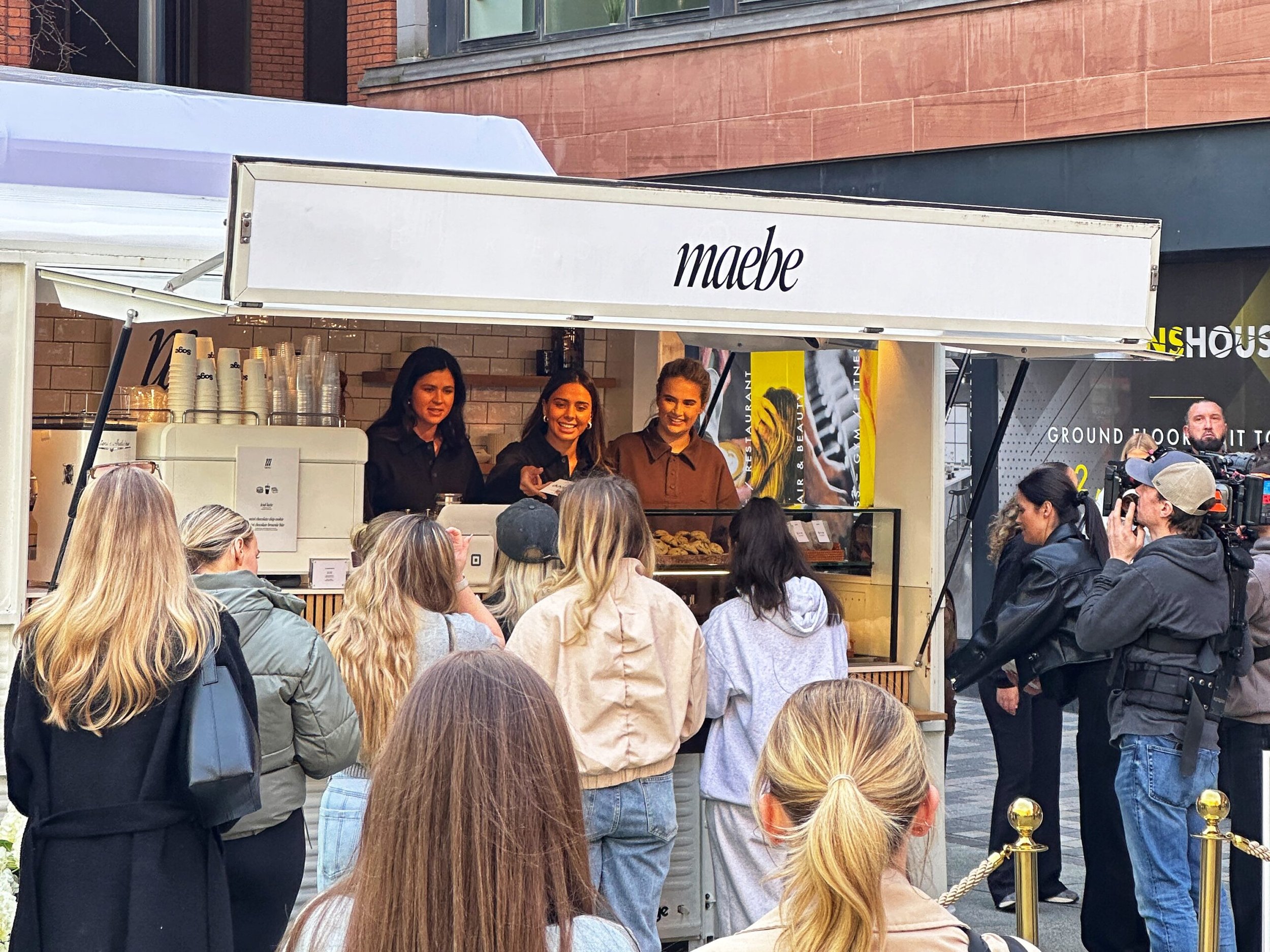
Molly-Mae launched the Maebe coffee truck pop-up last Spring
While beauty media sells a 'better version of you,' food media sells 'the best part of your day.' For lifestyle brands, food is the environment where life, and spending, actually happens.
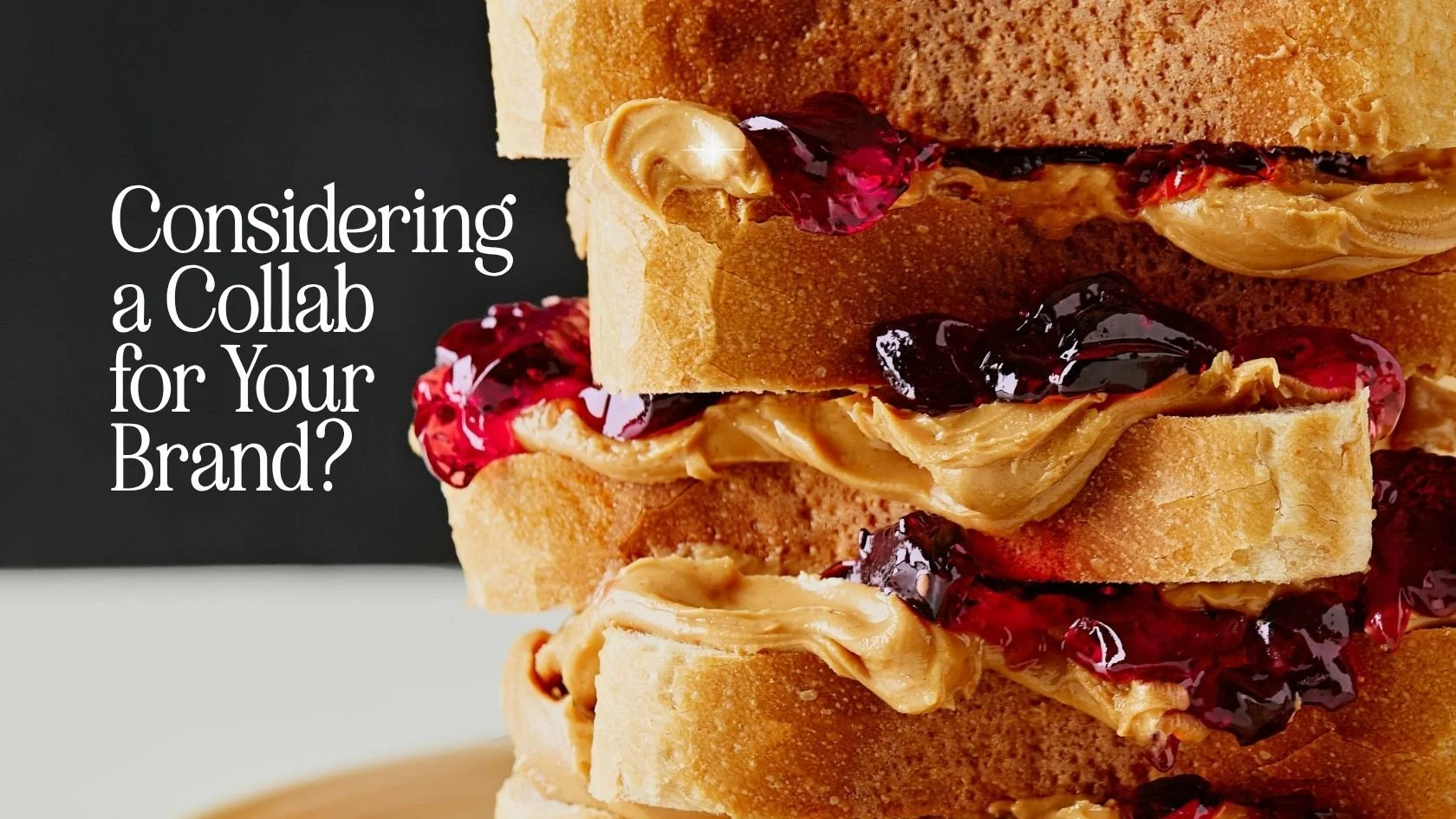
Let’s face it … with so many redundant brands out there vying for attention it’s getting very hard to break through the noise.
I’ve been watching the UK influencer Molly-Mae’s show on Prime, Behind it All lately ~ everything always sounds so much more tantalizing when described with an English accent, don’t you agree? I was immediately struck by how charming and relatable Molly-Mae is, which got me hooked. Midway through Season 1 (episode 3) Molly-Mae becomes enamored with her home coffee machine and comes up with the idea to create a Maebe branded Coffee Truck (the name of her clothing line). The idea was to create a vehicle by which Molly-Mae could generate publicity, and also get closer to her (local Manchester) fans/customer base. She (probably) sent out an email blast and social media post to her followers, and the result was coverage in hundreds of UK media outlets, and she was able to cheerfully get up close and personal with the ladies (mostly) who lined up in droves to get a coffee. I was never quite sure if she was charging for the coffees, but that’s probably a minor detail.
Then cue Gisou x Sephora Honey Butter Bar pop-up that happened in Dubai a couple weeks ago. It was a honey butter themed mini cafe designed to celebrate the launch of their Honey Glaze Collagen Therapy Lip Mask. It seemed like a clever idea but one that seemed to come off less successfully than Molly-Mae’s production.
Pop-ups featuring food are obviously nothing new ~ what is fun and a bit fresh is a fashion brand using it to enhance it’s relationship with its customers.
When Food Becomes Fashionable
Flipping the script on how to market food is Grillo’s Pickles! ← that exclamation point is well earned, and you’ll see why in a sec: Grillo’s, not satisfied to stand idly by and let the opportunity of Valentine’s Day slip away last year, created a Pickle Bouquet Kit, which sold out immediately. But the kit is just the curtain opener … if you missed the actual Grillo’s drop and want to create a pickle bouquet yourself, you can easily do it following the fun “How to Make a Pickle Bouquet” video. Just trot out and grab a jar of Grillo’s using the brand’s website to locate a local retailer, get yourself some tissue paper, bypass the plastic filler “flowers” and get some real herbs, add a little cheese and peppers, and you’re all set. Judging from the number of social media posts and press placements featuring Pickle Bouquets, I’d say the promotion has been a big hit.
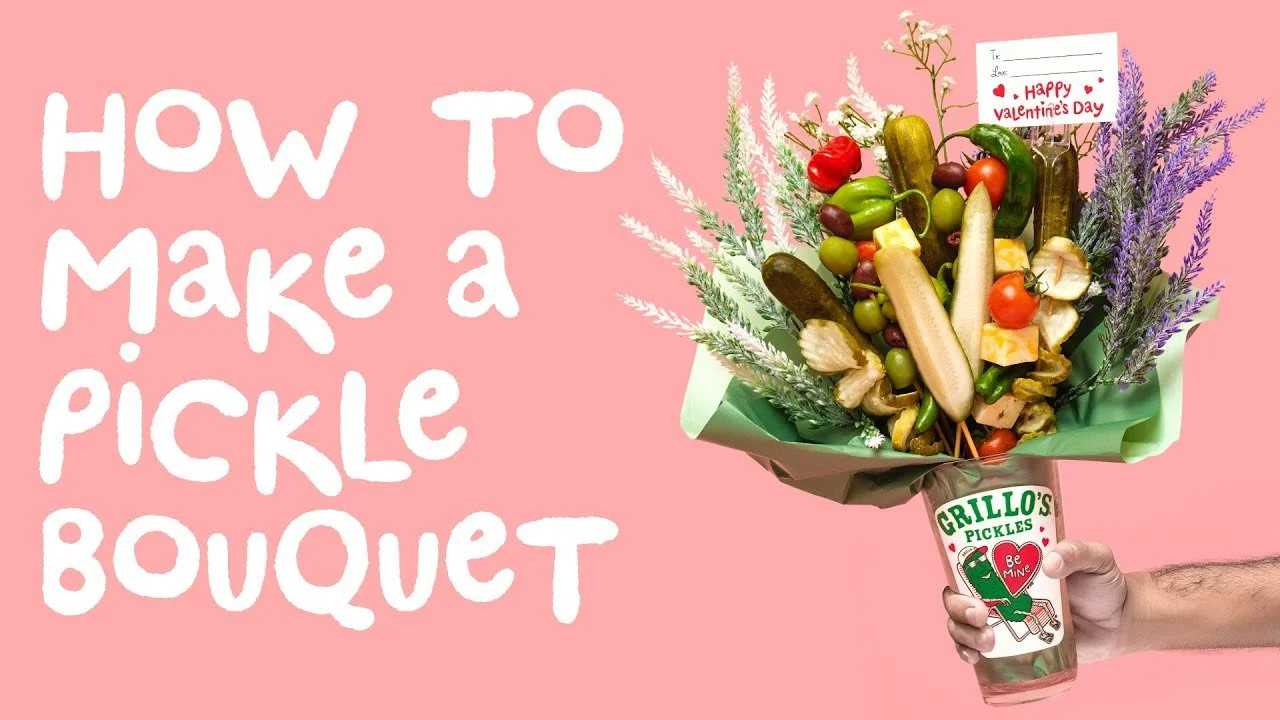
Grillo’s Pickle Bouquet Kit has been so popular that it sells out immediately (good use of scarcity Grillo’s!)
Food By the Numbers
What makes food such a tantalizing area for cross promotion? Food is often called the "ultimate horizontal" in marketing because, unlike niche hobbies, it is a universal daily requirement that carries deep emotional and cultural weight.
I wrote about getting freaky with frosting in photography a while back and it was one of my most trafficked posts … probably because of all the food porn intersected with glamorous products.
While pickles probably aren’t as sexy as butter and cream, they are quirky fun … something we can all use more of. Here are some facts and figures to intrigue you:
1. Food offers the "Halo Effect" of Trust
Food is inherently intimate ~ we put it inside our bodies. Consequently, consumers harbor a high level of trust for food influencers and editors. When a non-food brand (like a car or a home appliance) appears in a kitchen setting, it inherits the warmth and domestic reliability associated with the food space.
2. High Frequency of Engagement
A consumer might buy a new lipstick once every three months, but they decide what to eat 21 times a week.
The Statistic: Food and drink is the #1 category for Pinterest saves.
The Strategy: Lifestyle brands can insert themselves into these "micro-moments" of daily decision-making rather than waiting for a seasonal wardrobe change or a beauty restock.
3. Low Barrier to Entry (The "Mug" Effect)
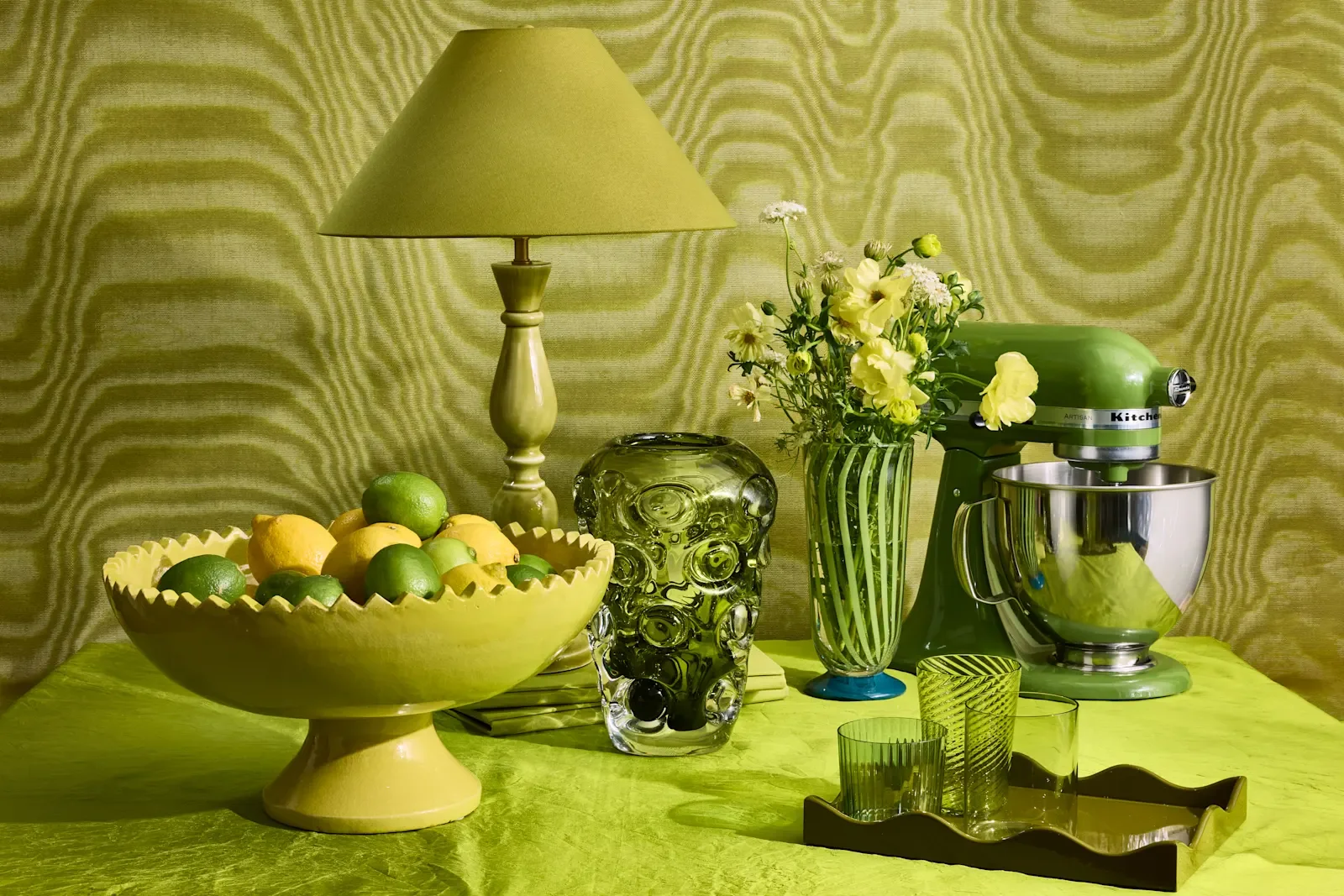
It is much easier to integrate a lifestyle product into a food scene than vice versa. For example a tech brand can show a tablet being used for a recipe, which is a natural integration. And a beauty brand can show a "morning smoothie" routine to sell skincare. Food provides a compelling context for the lifestyle product to exist.
4. Just about Everyone Thinks about Food
Universal Reach: 70% of social media users interact with food content at least once a week.
The "Save" Factor: Food content has a longer "shelf life" than news or fashion; recipes are saved and revisited for years, providing long-tail ROI for integrated ads, social campaigns, and long form posts.
Co-Consumption: 52% of people look at food content while actually eating or grocery shopping, putting your brand at the exact point of purchase.
Why food works so well for lifestyle brand marketing
It feels personal and trusted
It fits naturally into daily routines
It produces highly visual, media-friendly content
It creates long-term discoverability through saved and search-driven platforms
It lowers the barrier for lifestyle brands to enter cultural conversations
Key takeaways for founders and brand marketers
Food provides a trusted, emotionally warm environment for brand storytelling.
Food moments happen daily, creating more frequent brand touchpoints than fashion or beauty purchases.
Food-based content performs well on platforms designed for saving and planning, such as Pinterest.
Small brands can use food collaborations and pop-ups to generate press without large production budgets.
Integrating lifestyle products into food settings lowers creative and audience resistance.
FAQ
Why are lifestyle brands using food in pop-up marketing and campaigns?
Food creates emotional context and daily relevance. Unlike fashion or beauty, which are purchased occasionally, food is part of everyday routines. When a lifestyle brand appears in a food moment, it borrows warmth, trust, and frequency of engagement.
What is a food-based pop-up for a non-food brand?
A food-based pop-up is an experiential activation where a fashion, beauty, or lifestyle brand uses food or drink as the primary interaction—such as a coffee truck, café installation, or themed food bar—to promote a product, launch, or brand story.
Do food-themed activations actually help small brands get press?
Yes. Food-based experiences are easier for media to visualize, photograph, and explain in headlines. They also create natural local-interest angles and community participation, which helps smaller brands secure coverage beyond traditional product placements.
Why do food collaborations perform better on social platforms like Pinterest and Instagram?
Food content is highly searchable, saveable, and evergreen. Recipes, food styling, and kitchen moments are revisited long after publication, giving lifestyle brands longer visibility when their products are integrated into food-related content.
Is using food in marketing only effective for big brands and influencers?
No. Small brands can use food-based storytelling through simple collaborations, styled shoots, or small local pop-ups. The value comes from the cultural context food provides, not from the size of the activation.